

Layoff Insurance: What You Need to Know in 2026
Layoff insurance helps replace income after involuntary job loss, supporting essential expenses while you search for new work. Some policies also add protection, including coverage for identity theft, reputational harm, or other issues that may disrupt employment and delay re-employment timelines.
Discover the world's top
health insurers.
Compare quotes with
a click of the button.
With global layoffs affecting various industries, this type of insurance can provide peace of mind in uncertain times. In this Pacific Prime article, we explain how layoff insurance works, what it covers and excludes, how to claim it, and what options are available in different countries.
What Is Layoff Insurance and Who Needs It?

Also known as job loss insurance, layoff insurance is an insurance policy that can help employees tide over financial troubles in the event of a layoff. This type of insurance is not as common as many other insurance plans and is often only available for specified periods.
Depending on where you are located, layoff insurance may not be accessible either, especially during mass layoffs.
What’s more, the scope of layoff insurance can also be relatively narrow and come with many limitations. Sometimes, layoff insurance can be added to a critical illness or home loan protection plan.
These types of insurance policies cover those who work for themselves or lose their jobs and cover income loss due to being laid off.
Key Benefits and Coverage of Job Loss Insurance
Job loss insurance can cover things like:
- Reputational injury
- Personal accident and loss of job
- Identity theft that covers loss of job and financial loss
Reputational injury covers expenses involved in removing publications that negatively impact a person’s digital reputation and cause their loss of income. Along with IT specialist fees, this cover includes psychologist consultation fees if necessary.
When it comes to personal accident and loss of job, the insured may receive the specified sum insured during the insurance period if they suffer income loss due to having to leave their job.
This could be due to accidental bodily injury that results in temporary total disablement, permanent partial disablement, or permanent total disablement.
What Layoff Insurance Does Not Cover
Layoff insurance won’t cover those unemployed due to early retirement or voluntary resignation. Likewise, the insured won’t be covered if they’re terminated, suspended, or retrenched from employment because of poor performance.
You also won’t be covered if you lose your job due to health or pre-existing conditions. Individuals who are self-employed or voluntarily unemployed won’t benefit from this type of insurance either.
Steps to File a Layoff Insurance Claim
Filing a layoff insurance claim involves a clear process to confirm eligibility, submit documents, and receive benefits. The steps below explain what to expect and how to prepare.
- Review your policy terms
Confirm your layoff qualifies as involuntary termination and that any waiting period has been met. - Gather required documents
Prepare documents such as proof of income loss, termination letter from your employer, and any medical certificates if required. - Submit your claim to the insurer
Complete the claim form and submit all supporting documents within the timeframe stated in your policy. - Await assessment and payout
The insurer will review your claim and, if approved, begin benefit payments according to your coverage terms.
Layoff Insurance Coverage by Country
Layoff insurance can vary based on where you are in the world. In Canada, Credit Protection Job Loss Insurance offers payment protection to those who are involuntarily employed by handling certain debt payments on the insured’s behalf for a specified time period.
This type of payment protection is usually added on to Credit Protection Life Insurance (e.g., for personal loans, mortgages, and credit cards). Job loss insurance can also come as a package with Disability Insurance.
In the UK, there are three insurance policies available for those who lose their jobs: mortgage payment protection insurance (MPPI), payment protection insurance (PPI), and Short-term income protection insurance (STIP).
It’s possible that you already have this cover without realizing it, so be sure to ask your lender whether your credit card, loan, or mortgage is covered by insurance.
At the time of writing, British financial services comparison site Gocompare.com isn’t showing quotes for standalone layoff insurance policies, stating that many insurers are no longer offering redundancy cover.
Health Insurance Options After Being Laid Off
After being laid off, your main health insurance options include COBRA continuation coverage, individual health insurance plans, Medicaid, Medicare, and policies from the Health Insurance Marketplace. How long coverage lasts depends on your employer, insurer, and eligibility rules.
It’s possible that you can continue to receive coverage for a certain period of time if you’re let go, though what happens to your insurance when you get fired tends to be set in stone (i.e., your benefits are terminated).
In places like the US, your employer benefits, like medical insurance, are terminated once you are laid off.
The Consolidated Omnibus Budget Reconciliation Act (COBRA) is a federal program that allows employees to keep their group health insurance plan for anywhere from 18 months to three years after their employment ends, depending on their circumstances.
COBRA makes it possible for US employees to transition from their job without changing health insurance plans immediately, though you will have to cover the costs your company paid during employment.
Instead of COBRA, US employees who are laid off can purchase an individual health insurance plan. Under the Affordable Care Act, the decline in your income could help you qualify for a tax credit that can significantly reduce premiums.
Other options for keeping health insurance after a job layoff in the US include Medicaid, Medicare, and Health Insurance Marketplace.
When to Buy Layoff Insurance
Layoff insurance should be purchased before any redundancy announcements or rumors arise, ideally when there is a medium to high risk of job loss within the next three to six months, as policies typically won’t pay out once layoffs are expected or underway.
With that said, layoff insurance could be a smart move if there’s a medium to high chance of being laid off in at least three to six months’ time.
You should also consider layoff insurance if you don’t think you’ll find employment within three months of being laid off or if you can accept the policy waiting period (e.g., one to three months until your claims are covered).
But other options can allow you to access group insurance benefits once you’re laid off.
Some insurers make it easy to continue receiving benefits like pre-existing conditions coverage, no waiting period, same-room level transfer, guaranteed lifetime renewal, and more through continuation options.
One example of this is Bupa Hong Kong’s Transfer Care, which is a medical scheme that’s exclusive to their group health insurance members and lets them continue their health coverage after their group membership ends.
When buying any type of insurance plan, it’s highly important to understand all the exclusions as well as compare plans to ensure you’re getting the best deal.
Why Use an Insurance Broker Like Pacific Prime
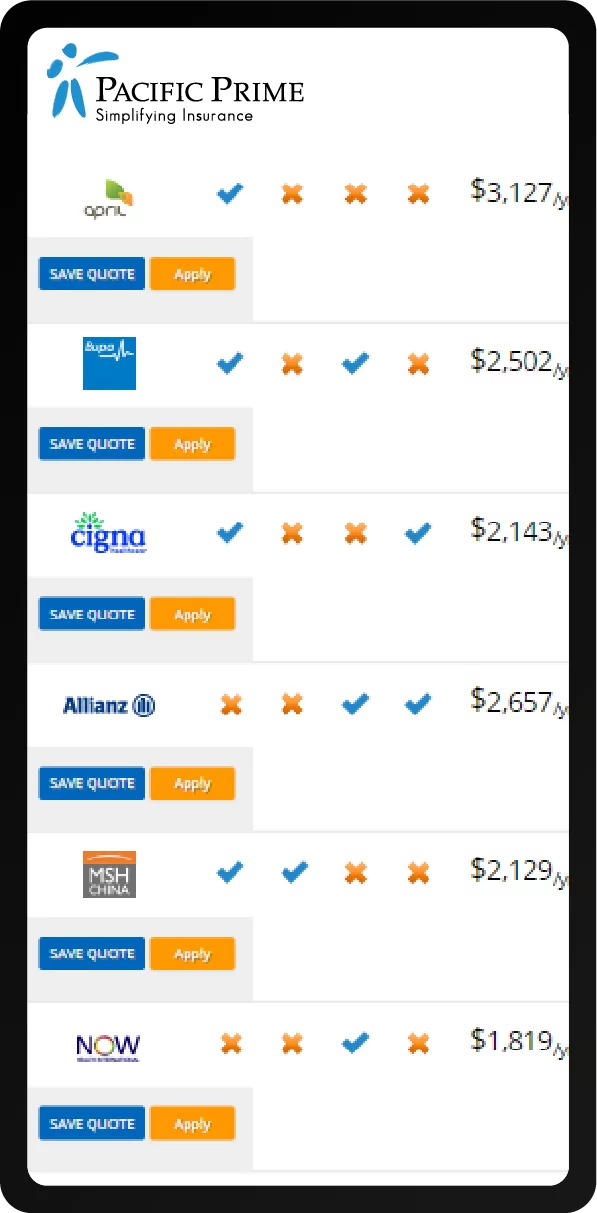
You can approach your employer’s insurer directly, but working with a reputable broker is often the best way to negotiate continuation or layoff insurance. A broker helps assess whether the coverage offered still fits your needs after a job loss and can guide you toward better options if needed.
With over 25 years of experience, Pacific Prime is a global health insurance intermediary and employee benefits specialist that acts in your best interest. You’ll receive claims and renewal support, insurer negotiations, and expert guidance at no extra cost, while paying the same as going direct.
Whether you’re looking for layoff insurance, continuation insurance, or other insurance plans, contact us today for unbiased insurance advice and a free plan comparison!
For further reading, check out 4 ways to deal with layoff anxiety.

After obtaining his Bachelor’s Degree in Social Sciences, International Relations from Mahidol University International College, Veerabhatr has forged his career as a content writer in the travel, lifestyle, and real estate industries, writing in both English and Thai. He now continues to hone his skills as a writer at Pacific Prime, looking to engage and educate the audience by simplifying insurance.
Writer by day, and a DJ by night, Veerabhatr is a staunch music lover, and listens to all spectrums of genres available. He also loves to drink beer (moderately), eat all types of food, go to the beach, and learn about different cultures across the globe. He is also a die-hard fan of football and motorsports.
- The Cost of Living in Italy in 2026 - May 8, 2026
- 12 Best Places To Live In Nepal in 2026 - May 8, 2026
- The Best Life Insurance in Hong Kong in 2026 - May 6, 2026

Comments
2 Comments
How can I find out if my current employer offers any continuation options for health insurance after a layoff? Are there additional coverages or supplemental insurance policies that can provide better financial security during periods of unemployment?
To find out if your current employer offers continuation options for health insurance after a layoff, review your employee benefits handbook or speak directly with your HR department. In the U.S., many employers offer COBRA, which allows you to continue your group health insurance for a limited period, though you’ll need to pay the full premium. Additionally, supplemental insurance policies like short-term health insurance, critical illness insurance, or even unemployment insurance can provide added financial security during periods of unemployment.
For personalized advice and options, Pacific Prime can help you explore health and supplemental insurance plans tailored to your needs—contact us for a free plan comparison today!
Ask a Question
We'll notify you
when our team replies!