

2026 Health Insurance for German Expats in Malaysia
German expats in Malaysia should plan to secure a private international health insurance plan because it will most closely compare to the type of coverage and quality of healthcare they are familiar with. Top providers who offer these plans are GeoBlue, MSH International, VUMI, and AXA Global.
Discover the world's top
health insurers.
Compare quotes with
a click of the button.
Are you a German moving to Malaysia soon? Need help finding the right health insurance for your needs?
This guide will tell you all you need to know about your public and private health insurance options in Malaysia, how much insurance costs, ways to save money, and more.
We also recommend checking out the top ten international health insurance companies in Malaysia for expats to find the best plan available.
Overview of Malaysia’s Healthcare System: For Expats
Malaysia operates a dual-tier healthcare system offering both public and private services for German expats living there. The public sector is heavily subsidised for citizens, while private care offers faster access and more English-speaking staff for foreign residents.
Malaysia provides a solid healthcare framework, especially in the private sector, but German expats should plan around paying full cost or buying private/international health-insurance coverage.
The system is efficient and expat-friendly in major cities, but requires awareness of cost, local vs non-resident rates, and the need for insurance. As a German national living in Malaysia, you will normally be treated at the full non-resident rate in public hospitals, making private health insurance highly recommended.
Here are the tiers of Malaysia’s system:
- Public Healthcare Tier: Provided through the Ministry of Health Malaysia, this system is tax-funded and offers very low-cost services to Malaysian citizens and permanent residents.
- Private Healthcare Tier: This tier is well developed in urban centres, offers shorter waiting times, and caters heavily to expats and medical travelers.
Key Features Relevant for German Expats
- English-Speaking Providers: Many doctors in Malaysia’s major cities are internationally trained and fluent in English, which aids communication for German expats.
- Affordability: Malaysian healthcare is generally considered significantly less expensive than in Western Europe.
- Urban vs Rural Divide: The best medical infrastructure is concentrated in cities like Kuala Lumpur and Penang; rural areas may have markedly fewer resources.
- Health Security: As someone familiar with the German healthcare system’s comprehensiveness, you’ll want clarity on how medical coverage works abroad. Knowing the system’s strengths and limitations in Malaysia helps you select suitable insurance.
- Expectations of Quality: With the strong private sector in Malaysia, you’ll find many of the comforts and standards you expect from German care, but only if you’re prepared to pay the higher rates or secure appropriate insurance.
- Planning Ahead: Rural postings or remote living may limit access to private facilities; for German expats considering anywhere beyond Kuala Lumpur or Penang, factoring in evacuation, specialist access, and insurance coverage is important.

How Germany’s Healthcare System Compares to Malaysia’s
Germany’s healthcare system delivers universal, statutory insurance for nearly all residents, while Malaysia operates a dual-tier public and private model where expats must largely rely on private care. Let’s compare various features of both systems below.
Structure & Coverage:
- Germany’s Universal Coverage: Every resident in Germany must have health insurance under the statutory health insurance scheme (SHI), covering around 86-90% of the population.
- Malaysia’s Dual-Tier System: Malaysia features a heavily subsidised public sector alongside a sizable private sector, with about 70% of services delivered publicly but many specialists and large hospitals in the private sphere.
- Expats’ Access Difference: German expats in Malaysia will find themselves outside the subsidised citizen public tiers, making the private option (or international health insurance) much more relevant.
Funding & Financing:
- Funding in Germany: Funded by contributions from employees and employers, Germany’s health spending equaled about 11.7% of GDP in recent years.
- Spending in Malaysia: Malaysia’s total health expenditure as a percentage of GDP has been comparatively low (around 4–5%) in the past data, meaning less public spending per capita.
- Out-of-Pocket and Private Sector: In Malaysia, the private sector fills a big role for non-citizens/expats, so out-of-pocket costs or private insurance become more important versus Germany, where the statutory scheme covers extensive services.
Access & Resources:
- Germany Resource Levels: Germany has 7.8 hospital beds per 1,000 people and about 4.52 physicians per 1,000.
- Malaysia Resource Levels: Malaysia has about 2.1 hospital beds per 1,000 population and around 2.3 doctors per 1,000.
- For a German expat used to high resource availability, Malaysia’s private hospitals in urban centres can match international standards, but rural or public facilities may lag relative to German expectations.
Germany’s healthcare model offers repeatable, predictable coverage and resourcing under a statutory system. In Malaysia, you’ll find a good healthcare framework, especially in private urban hospitals, but you’ll need to assume a more self-insured, cost-oriented mindset.
Also, ensure you have appropriate private or international cover aligned with your expectations and origin.

Can German Expats Use Public Healthcare in Malaysia?
German expats can use Malaysia’s public healthcare facilities, but they will not automatically receive the heavily subsidised public healthcare rates that Malaysian citizens and permanent residents enjoy. You’ll often pay full non-resident rates or need specific schemes.
Expats must register as foreign or non-resident patients when using a public hospital or clinic, and will be charged accordingly
Foreign workers may be covered by the mandatory Foreign Worker Hospitalisation and Surgical Scheme (FWHS), which provides limited public-hospital coverage if the employer enrolls them.
What This Means for German Expats
- Higher Out-of-Pocket Cost: While public hospitals are more affordable for locals, Germans living in Malaysia will face elevated charges and might find costs comparable with private care for some procedures.
- Waiting Times and Priority: Public hospitals serve a large local population, and expats may face longer waiting times or reduced priority compared with private hospitals.
- Quality Variation by Location: Urban public hospitals often meet high standards (English-speaking staff, modern equipment), but rural public facilities may be less well-resourced.
- Check Visa/Residency Status: Ensure your visa or residence permit is valid and you are registered properly — this affects eligibility for public healthcare access.
- Consider Private/International Insurance: Given the limitations of public system access and higher costs for non-citizens, obtaining private or international health insurance significantly enhances access and financial security.

Private Malaysia Health Insurance Options for Germans
When it comes to health insurance in Malaysia, German expats will find that the most reliable route is to obtain private or international coverage from a well-recognised insurer, as the subsidised public rates do not apply to non-citizens.
German expats should consider private/international insurance for the following reasons:
- Avoid Full-Price Public Bills: Since German nationals won’t benefit from the heavy subsidies that Malaysian citizens receive, paying out of pocket for public care can be financially risky.
- Access to Quality Private Care: The private sector offers better-equipped hospitals, shorter wait times, and many English-speaking staff—important features if you’re used to German healthcare standards.
- Global/Portable Coverage: If you may travel back to Germany or move between countries, choosing an international plan ensures you have buffer coverage across borders.
Key Types of Health Plans Available for German Expats
- International Health Insurance: Globally-oriented plans from brands like AXA, Allianz, Cigna, etc., offering broad geographic scope and high coverage ceilings.
- Local Private Health Insurance: Malaysian-based insurers offering plans tailored to the local market; often lower cost but may come with limitations for foreign residents.
- Employer-Sponsored / Worker Scheme: For foreigners working in Malaysia, the Foreign Worker Hospitalisation and Surgical Scheme (FWHS) is mandatory in many cases, though often limited in scope.
Average Cost of Medical Insurance in Malaysia
The annual cost of health insurance for a German expat in Malaysia typically ranges from MYR 1,000 to MYR 6,000 (approximately €200 to €1,100), depending on age, coverage, and provider.
The typical costs for medical coverage in Malaysia are:
- Basic coverage for a single individual (hospitalisation only, younger age) starts from about MYR 480–600/month (≈ €95–120/month).
- Mid-range plans with broader benefits (including outpatient, evacuation) often fall in the band MYR 1,200–2,000/month (≈ €235–390/month).
- Family or comprehensive global plans may exceed MYR 3,000/month (≈ €585/month) when including maternity, dental, and high annual limits.
Here is a snapshot of typical monthly costs for German expats in Malaysia.
Estimated Health Insurance Premium Cost in Malaysia |
||
| Plan Type | Estimated Monthly Premium (MYR) | Estimated Monthly Premium (EURO) |
| Basic Individual (age ~30) | MYR 480 | €95 |
| Intermediate Individual | MYR 1,100 | €215 |
| Family (2 adults + children) | MYR 2,500 | €490 |
What Drives the Cost Up or Down
- Age & Health Risk: Older Germans or those with pre-existing conditions will pay higher premiums.
- Coverage Scope: Adding outpatient care, maternity, evacuation, or high annual limits significantly increases costs.
- Geographic Scope: Plans covering worldwide (including Germany/EU) cost more than Malaysia-only coverage.
- Deductibles & Co-payments: Higher excess or higher co-pays reduce premiums; zero-excess plans cost more.
- Provider Network & Hospital Category: Plans with access to top private hospitals in Kuala Lumpur or Penang cost more than local tier-1 hospitals.

Recommended Insurance Providers in Malaysia for Expats
GeoBlue, MSH International, VUMI, APRIL International, AXA Global, and Bupa Global are our top recommended health insurance providers for German expats living in Malaysia. These private international insurers have renowned reputations and extensive experience.
GeoBlue in Malaysia
GeoBlue (now operating under the Blue Cross Blue Shield Global umbrella) has provided international health insurance since 1997 and supports coverage in over 180 countries with an elite provider network.
GeoBlue is ideal for German expats in Malaysia because it offers a truly global network (great for travel to Germany or Europe) and 24/7 multilingual support. They also offer direct-billing options, which are helpful when dealing with unfamiliar overseas medical systems.
Core plans:
- Xplorer Global Medical
- Voyager Travel Insurance
- Trekker Multi-Trip Travel Insurance
- Navigator (For Students & Academics)
MSH International in Malaysia
MSH International is a global specialist in expatriate health insurance, covering over 330,000 insured members across more than 190 countries. German expats in Malaysia value MSH’s tailored expatriate solutions, multilingual service, and strong presence in Asia, including Malaysia.
Core plans:
- First’Expat+
- Start’Expat
- neoTempo (Short-Stay)
- LivExpat
VUMI in Malaysia
VUMI (VIP Universal Medical Insurance) offers premium international health insurance with VIP-level services, wide flexibility, and coverage across many countries. For German expats in Malaysia who expect a higher tier of service and benefits, VUMI is the right provider.
They deliver top-level networks, concierge-style support, and lifetime renewability—features aligning with the expectations of someone accustomed to the German health system.
Core plans:
- Global Flex VIP Basic
- Global Flex VIP Standard
- Global Flex VIP Superior
- Global Flex VIP Ultra
APRIL International in Malaysia
April International is a France-based global insurer operating in over 14 countries, serving approximately 180,000 policyholders with customizable solutions for expatriates.
For German expats in Malaysia, APRIL International is a strong choice because it provides flexible cover tailored to expat profiles (single, family, digital nomad), has local-market presence in Asia (such as Malaysia), and offers global portability for travel to Germany or Europe.
Core plans:
- Global Expat
- Worldwide Care
- SmartExpat
- StudentExpat
AXA Global Healthcare in Malaysia
AXA Global Healthcare offers international health insurance, including Malaysia-specific expat coverage, with features such as virtual doctors, mental-health support, and fast claim reimbursement.
German expats benefit from AXA’s familiarity (many Germans know the AXA brand), the availability of local Malaysian plans aligning with expat needs, and modern digital support (virtual consultations), which helps when adapting to a new country and healthcare system.
Core plans:
- Foundation
- Standard
- PrestigePlus
- Excellence
Bupa Global in Malaysia
Bupa Global is a leading international health insurer known for premium service, global networks, and plans designed for expats that want broad geographic coverage and high standards.
For German expats in Malaysia, Bupa Global is ideal if you want “German-level” service abroad: strong specialist networks, coverage for chronic/serious illness, global evacuation, and multi-language support. If your healthcare expectation is high, this provider delivers accordingly.
Core plans:
- Major Medical
- Select
- Premier
- Elite

Special Considerations for German Expats
German expats living in Malaysia face several unique healthcare and insurance considerations, such as insurance costs, preventive care practices, and coverage portability, due to differences between the two systems and legal frameworks.
Understanding these differences will help ensure continuous coverage, compliance, and quality medical care abroad.
- Loss of Statutory Health Insurance (GKV) Coverage: Once you leave Germany and are no longer contributing to the German social insurance system, your statutory coverage (GKV) typically ends. You must secure private or international coverage while living in Malaysia.
- Private Insurance Portability: Germans with private health insurance (PKV) should check whether their policy includes international extensions or short-term overseas clauses, as many domestic PKV policies only provide limited coverage outside the EU.
- Residency and Visa Requirements: Certain visa categories in Malaysia, such as the Malaysia My Second Home (MM2H) program or Employment Pass, may require proof of valid medical insurance.
- Preventive Care Practices: Preventive check-ups are less institutionalized in Malaysia’s healthcare system compared with Germany’s, so expats should proactively schedule screenings and wellness visits through private providers.
Practical Tips for Health Security
- Carry Medical Documentation: Maintain a translated medical summary (English or Malay), including allergies, blood type, vaccination history, and chronic conditions for emergencies.
- Emergency Medical Evacuation: Given regional limitations in rural Malaysian hospitals, choose a plan that includes evacuation to Singapore or Germany for serious cases.
- Understanding Billing: Private hospitals often require upfront payment or pre-authorization for treatment. Ensure your insurance supports direct billing whenever possible.
- Repatriation Coverage: For long-term German expats, select a plan that includes medical repatriation to Germany in case of severe illness or injury.
- Health and Safety Differences: Malaysia’s tropical environment presents new risks like dengue fever, heat exhaustion, and foodborne illness—factors less common in Germany.
- Currency and Payment Methods: Medical bills are typically charged in Malaysian Ringgit (MYR). International insurers generally reimburse in euros or USD, so be mindful of currency exchange rates and transfer fees.
- Tax Implications: Premiums for foreign insurance plans may not be deductible under German tax law unless you maintain partial residency or business ties in Germany. Consult a tax adviser familiar with both systems.
- Retirement Coverage: For retirees using MM2H or long-stay visas, plan for long-term care options, as Malaysia lacks the extensive eldercare infrastructure Germany provides.
How Germans Apply for Health Insurance in Malaysia
Applying for health insurance as a German expat in Malaysia is a straightforward process when you know what documents to prepare and what providers to approach. Following the right steps ensures seamless coverage and compliance with visa requirements.
Step-by-Step Process
- Determine Your Residency Status
Identify your visa type (Employment Pass, MM2H, or dependent visa) and confirm whether medical insurance is mandatory. Most long-term visa holders are required to maintain private health coverage. - Assess Your Coverage Needs
Consider factors like family size, medical history, travel frequency, and desired hospital access. Germans accustomed to comprehensive coverage through GKV or PKV should look for international plans with strong inpatient and outpatient benefits. - Compare Local and International Plans
Research Malaysia-based providers like AIA, Allianz, and Prudential, as well as international insurers such as Bupa Global, AXA, or April International. Compare premiums, benefits, annual limits, and hospital networks side-by-side. - Request a Personalized Quote
Use comparison platforms such as Pacific Prime Malaysia to get tailored quotes. Provide details like age, visa type, and coverage preferences for an accurate premium estimate. - Submit the Required Documents
Prepare copies of your passport, visa (if already issued), proof of Malaysian address, and previous medical records or insurance history. Some insurers may also require a basic medical questionnaire or screening. - Review and Finalize Plan Details
Check the policy’s coverage scope—especially for pre-existing conditions, maternity, and emergency evacuation. Make sure the plan allows direct billing at major hospitals like Gleneagles Kuala Lumpur or Prince Court Medical Centre. - Pay the Premium and Receive Confirmation
Once you’ve selected a plan, pay your premium online or through an authorized agent. You’ll receive an electronic policy document and insurance card, usually within 3–5 business days. - Register for Cashless Hospital Access
Many private hospitals in Malaysia require pre-registration with your insurer for direct billing. Confirm this process to avoid paying large sums upfront during a hospital visit. - Keep Digital and Physical Copies
Store your policy number and insurer contact details in both printed and digital formats. This ensures quick access during emergencies or visa renewals. - Review Annually
Health needs can change, and so can policy terms. Review your plan every 12 months to ensure it still fits your budget, lifestyle, and coverage requirements, especially if you move between Malaysia and Germany frequently.
How to Approach This as a German Expat
- Start Early: Before you move from Germany (or soon after arrival), begin comparing plans so you’re covered from day one.
- Use a Broker Familiar with German-Expats: Given your background from Germany, consider using a broker who understands German-expat needs (e.g., German language support, repatriation considerations).
- Tailor to Your Situation: If you’re single vs moving with family, your coverage needs will differ (e.g., maternity, child cover, evacuation).
- Check Local Facilities & Access: If you’ll live outside major cities, ensure the insurer’s network and hospital access still meet your standards.
- Read the Fine Print: Especially for what counts as pre-existing, what waiting periods exist, what ages the plan covers, etc.


Tips for Foreigners to Save on Premiums in Malaysia
German expats can significantly reduce their health insurance premiums in Malaysia by choosing the right plan structure and using a few smart cost-saving strategies. Here are the top five ways to save while maintaining reliable coverage.
- Choose a Higher Deductible
Opting for a higher deductible lowers your monthly premium without sacrificing overall protection. Many German expats prefer a MYR 2,000–5,000 deductible (€390–€970) to balance affordability and coverage security. - Select Regional Instead of Worldwide Coverage
Limiting coverage to Malaysia or Southeast Asia instead of global protection reduces premiums by up to 30%. This is ideal if you don’t plan frequent travel beyond the region. - Use a Trusted Insurance Broker
Working with an international insurance broker like Pacific Prime Malaysia gives you access to discounts, plan comparisons, and insider knowledge on policies tailored to expats—saving both time and money. - Pay Annually Instead of Monthly
Most insurers offer a 5–10% discount for annual premium payments. This can amount to hundreds of MYR in yearly savings, depending on your plan and family size. - Review Coverage Annually
Reviewing your policy every year helps you avoid overpaying for benefits you no longer need. Expats who downgrade or switch to a local network plan after the first year often save 10–20% in premiums.
Frequently Asked Questions
What is the average cost of health insurance for expats in Malaysia?
The average monthly premium for expat health insurance in Malaysia ranges from RM100 to RM500 (approximately €21 to €105), depending on factors like age, coverage level, and health status.
Are there any mandatory health insurance requirements for foreign workers in Malaysia?
Foreign workers in Malaysia are required to enroll in the Foreign Workers Hospitalization and Surgical Scheme (FWHS), which provides basic healthcare coverage. Employers typically handle the registration process.
Can I use my German health insurance while living in Malaysia?
German statutory health insurance (GKV) generally does not provide coverage outside the EU. Expats are advised to obtain private or international health insurance to ensure adequate medical care in Malaysia.
Conclusion: More Expat Resources
German expats in Malaysia can access a reliable healthcare system by understanding local regulations, evaluating private or international insurance options, and planning for costs.
Securing comprehensive coverage ensures peace of mind, rapid access to quality care, and alignment with familiar German standards.
To discuss your questions with an international health insurance expert, contact our team online or via a call to +852-3113-1331.
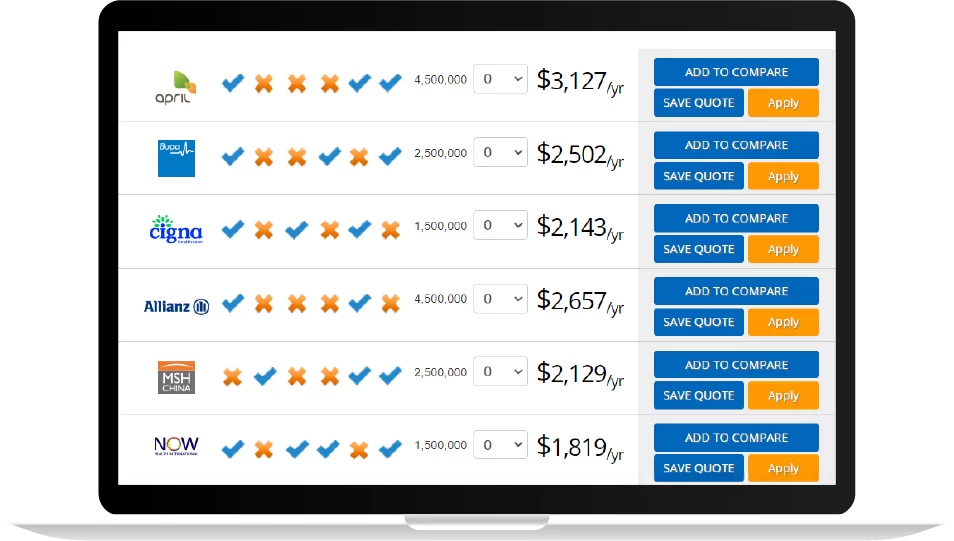
You can begin comparing quotes and plans from the top providers right away with our insurance quote generator that has over 50,000 plans in its database.
We recommend German expats explore the following resources before their move:
- Health Insurance for German Expats in Greece
- Health Insurance for German Expats in South Africa
- Health Insurance Options in Malaysia for Foreigners and Expats
- Dental, Vision & Wellness Riders for Malaysian Expats
- Malaysia’s Ministry of Health

Serena earned her Bachelor’s Degree in Psychology from the University of British Columbia, Canada. As such, she is an avid advocate of mental health and is fascinated by all things psychology (especially if it’s cognitive psychology!).
Her previous work experience includes teaching toddlers to read, writing for a travel/wellness online magazine, and then a business news blog. These combined experiences give her the skills and insights she needs to explain complex ideas in a succinct way. Being the daughter of an immigrant and a traveler herself, she is passionate about educating expats and digital nomads on travel and international health insurance.
- An Expat’s Guide To East Coast Singapore - November 3, 2026
- Hospitals in New Zealand for Expats & Visitors (2026 Guide) - October 16, 2026
- Top 9 Health Insurance Companies for Expats in Malta - October 7, 2026
Comments
Comments are disabled for this post