

Health Insurance for German Expats in Spain
Germany and Spain enjoy a reciprocal health agreement, so German expats can access Spain’s public healthcare system temporarily with their European Health Insurance Card. Germans applying for a long-term visa, however, will need proof of comprehensive coverage, often through private insurance.
Discover the world's top
health insurers.
Compare quotes with
a click of the button.
Are you a German expat wanting to access Spain’s public healthcare system? Are you looking into other insurance options for your time living abroad? This article will cover these topics and more to make the process of finding tailored health insurance simple.
We’ll give you an overview of Spain’s healthcare system, outline health insurance requirements for German expats, explain who can get Spain’s public healthcare, lay out the costs of coverage, suggest the top private insurance providers in Spain, and more.
After you’ve finished this article, check out our guide to the 15 best cities for expats in Spain and our go-to checklist for people moving to Spain. Once you’re ready to begin comparing private insurance plans side by side, we’ve got you covered with our free quote tool.
Understanding Spain’s Healthcare System
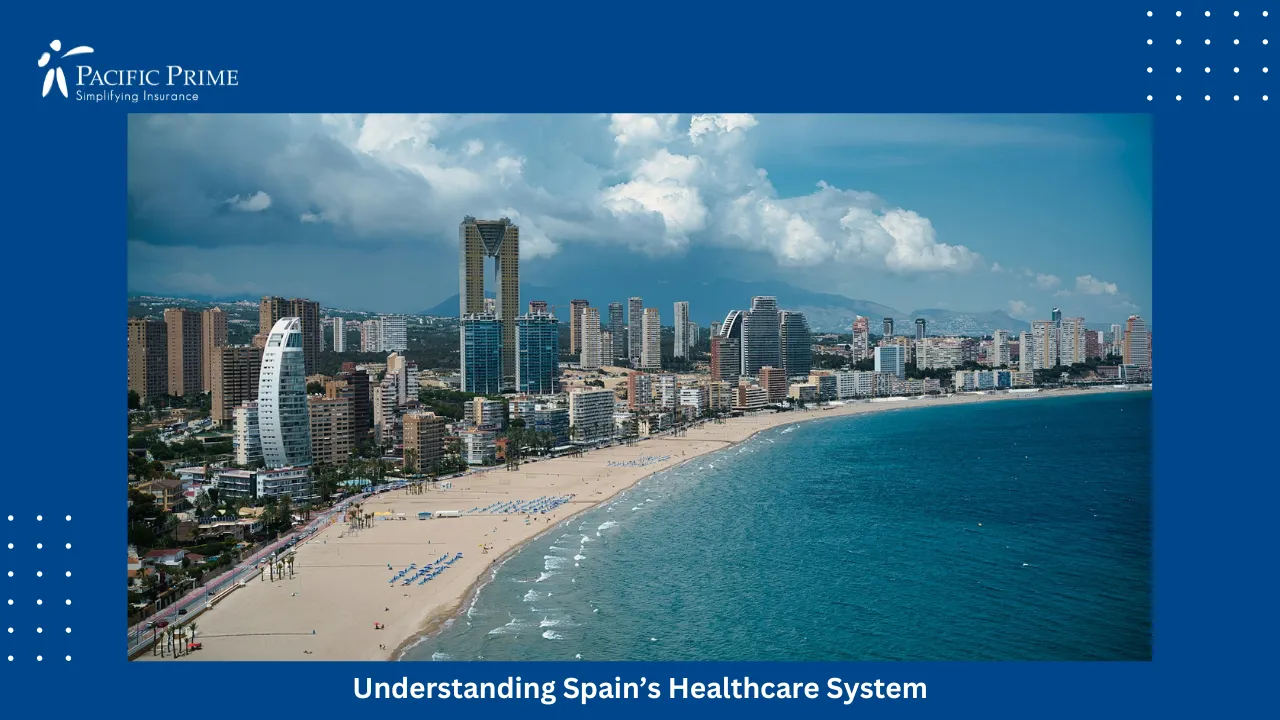
Spain’s universal healthcare system is known as the Spanish National Health System, or Sistema Nacional de Salud (SNS). The SNS offers coverage for most services, but it excludes dental care, pharmacy costs, and ambulance costs.
Spain’s decentralized public healthcare system relies on 17 autonomous regional governments to budget and allocate healthcare resources for their own region, so facility accessibility and quality, as well as treatment offerings, vary across the country.
With this variability in mind, expats should research what medical care is like in each region of Spain: yes, most medical facilities are top notch, but consider what type of care you most frequently need. Then check that your chosen area has services that support your needs.
Expats looking for expanded coverage or a wider network selection can also rely on Spain’s private healthcare sector. The private sector is known for having shorter wait times and more exclusive offerings, like translation services, that might appeal to German expats living abroad.
Whether you seek medical treatment at public hospitals like Hospital Universitario La Paz or you opt for care at private hospitals like Clínica Universidad de Navarra, most medical facilities in Spain are known to staff well-trained professionals and use state-of-the-art tech.
For an in-depth guide on the best hospitals in Spain for expats, head to our article on Hospitals in Spain – Healthcare for Expats.
Health Insurance Requirements for Expats in Spain
Comprehensive health insurance is required for most long-term expat visas in Spain. German expats can use their EHIC to get medical care in Spain temporarily, but the EHIC does not meet Spain’s insurance quotas for long-term visas. German expats will have to purchase a local or international plan.
Health insurance requirements for expats in Spain include:
- Coverage of at least €30,000
- Validity across Spain and the entire Schengen zone
- Comprehensive coverage, including emergencies, hospitalization, and repatriation.
- Coverage with no copay or deductible
- Coverage for the entirety of your stay
Visa acceptance in Spain is highly unlikely without proof of insurance coverage that meets these minimum standards.
Can German Expats Use Public Healthcare in Spain?
German expats can qualify for public health insurance in Spain if they live in the country long enough, contribute to Spain’s social security, have S1 coverage, work for a Spanish employer, or pay for Convenio Especial. Short-term visitors can use their European Health Insurance Card.
Here is the short and sweet of how German expats can get access to Spain’s public healthcare (SNS):
- Permanent Residence in Spain: If you live in Spain for five years or more, you can apply for permanent residency, which will give you access to state healthcare. Once you’re a permanent resident of Spain, register for healthcare at your local INSS office.
- Contribution to Spain’s Social Security: Expats who are self-employed, such as digital nomads, must register with and contribute to social security independently to access public healthcare.
- S1 Form: An S1 entitles you to Spain’s state healthcare, but it is paid for by Germany. You may qualify for an S1 if you receive a German state pension or if you’re a frontier worker. Contact your German statutory health insurance provider or the German Liaison Office to see if you’re eligible.
- Working for a Spanish Employer: Those who work for a Spanish employer are automatically enrolled in the social security system, which entitles you and your dependents to public healthcare.
- Convenio Especial: Convenio Especial grants non-working residents who don’t automatically qualify for public healthcare access to medical care for a price of €60 a month for those under age 65 or €157 a month for those over age 65. Dependents must register separately.
- The European Health Insurance Card: Only temporary, basic medical care is available through a European Health Insurance Card, as the EHIC is meant for those on brief stays abroad, such as travelers.
Expats hoping to move to Spain on a long-term visa will need private insurance to meet visa requirements and access care.
To get public insurance, German expats should register at their local health center and obtain a health card. Spain’s health card (Tarjeta Sanitaria Individual (TSI) grants residents access to coverage for services such as primary care, hospital care, medications, and more.
Let’s break down with a bit more detail each of the ways German citizens may use public healthcare in Spain.
Using Your European Health Insurance Card (EHIC) for Spanish Healthcare
The European Health Insurance Card covers medically necessary care for EU citizens with statutory insurance while they visit other European countries. With this card, Germans can receive the same care at the same cost as Spanish citizens, but the care available is not comprehensive.
Healthcare received with an EHIC is only meant for emergencies or until German travelers can make it back home. This includes coverage for medically necessary treatment, such as:
- Emergency treatment and visits to the accident and emergency (A&E)
- Treatment or routine medical care for long-term or pre-existing medical conditions
- Routine maternity care, as long as you’re not going abroad to give birth
German expats moving to Spain with their family should make sure to get an EHIC for each family member. To apply, visit your German health insurance institution and have your:
- Full name
- Address
- Date of birth
- National Insurance number
Using S1 Coverage for Spanish Healthcare
The S1 is part of an agreement across the EU to coordinate social security. This agreement allows healthcare rights to travel across European borders, so if you receive a German state pension, are a dependent of someone with an S1, or a frontier worker, you may qualify.
You can find out more about who qualifies for S1 coverage and what S1 coverage entitles you to here.
To apply for S1 coverage for Spain, you’ll need to:
- Get Your S1 Form: Contact your health insurance provider in Germany and receive an S1 form from them. You should do this several months before you intend to move to Spain and need coverage.
- Register your S1 Form in Spain: Make an appointment online or for an in-person visit with the INSS. There, you’ll submit your S1 form. Once accepted, the INSS will issue a certificate confirming your right to healthcare.
- Receive your Spanish Health Card: This health card (your tarjeta sanitaria, or TSI) is essential to get care from general practitioners, receive treatment at hospitals, and to gain access to other public healthcare services.
Remember to register your German-issued S1 form in Spain as soon as possible after you’ve received it. Once you’ve registered your S1 form in Spain and received your TSI, register with a local doctor or clinic.
Convenio Especial for German Expats
Spain’s Convenio Especial aims to help non-working residents who don’t qualify for public healthcare, like expats living in Spain on a non-lucrative visa, to access medical care at a fee. The program covers most medical services, including pre-existing conditions, but is not fully comprehensive.
Here are some specifics about Spain’s Convenio Especial:
- Cost: Those under 65 pay €60 a month, while those over 65 pay €157 a month.
- Coverage: With public health system access, this program covers preventative care, diagnosis, treatment, and rehabilitation from public healthcare centers, and emergency health transportation. Both primary and specialised healthcare, as well as outpatient and inpatient healthcare, are also covered.
- Exclusions: Outpatient pharmaceuticals, outpatient ortho-prosthetics, foods for special medical purposes, and non-emergency medical transportation are all excluded from coverage costs and must be paid for by the individual.
- Pre-existing Conditions: Convenio Especial covers pre-existing conditions, which is a huge advantage for those who might not qualify for private insurance or who don’t want to pay higher premiums required for private coverage for those conditions.
- Dependents: The program does not automatically cover dependents since each individual must apply for and pay the fee separately.
Private Health Insurance Options for Expats
Private insurance offers German expats in Spain access to high-quality private healthcare facilities and is often necessary, at least temporarily, to receive your visa. Private health insurance plans are comprehensive and offer optional benefits that may not be included in public health insurance.
You can purchase private health insurance from local providers or international health insurance providers. A major benefit of securing a plan from an international health insurance provider is the global portability of the plans and the worldwide provider network.
Average Cost of Health Insurance in Spain
Private health insurance premiums for Spain typically range between €50 and €200 a month, depending on your age, coverage, and provider. Private insurance providers often have customizable options so you can tailor your plans to your budget and lifestyle.
If you choose to receive care through Spain’s Convenio Especial, it costs €60 a month for those under 65 and €157 a month for those over 65.
Recommended Health Insurance Providers
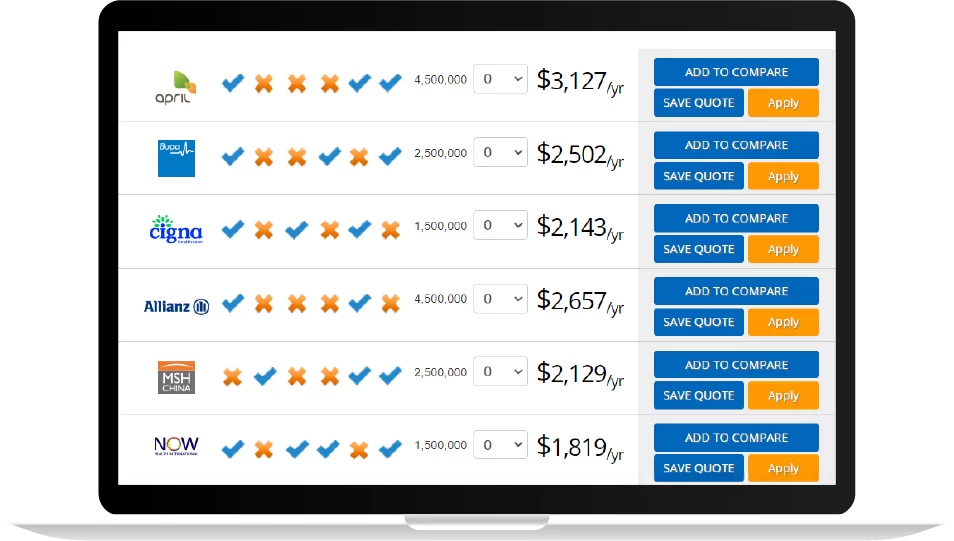
The best providers for German expats in Spain include AXA, Allianz, April International, and Cigna. These providers offer international coverage for customizable, flexible care not just in Spain but worldwide, and their plans are designed specifically to fit the lifestyle of expats.
For a look at our top ten recommendations, check out this article.
AXA for German Expats in Spain
AXA offers five plans for German expats in Spain: Prestige Plus, Prestige, Comprehensive, Standard, and Foundation. With exceptional customer support and annual maximum benefit limits ranging from about €138,107–6,905,362, AXA is a favorite among expats.
Top AXA benefits include:
- Excellent Customer Support: Includes second medical opinions, virtual doctors, and mental health services.
- Core Benefits: Includes inpatient hospital charges and surgery, emergency cover, cancer care, ambulance transport, medical evacuation, repatriation, and diagnostic tests.
- High-Tier Benefits: Includes non-routine dental care, outpatient treatment, and chronic conditions.
- Add-On Riders: Includes outpatient treatment, tests, and vaccinations (for those plans where these are not included by default).
| Plan | Annual Benefit Limit (Euros) |
| Foundation | About €138,107 |
| Standard | About €1,381,072 |
| Comprehensive | About €2,071,609 |
| Prestige | About €2,762,145 |
| Prestige Plus | About €6,905,362 |
Allianz for German Expats in Spain
Allianz Care offers reliable international health insurance solutions for expats in Spain through their core plans: Allianz Care Base, Care Enhanced, and Care Signature. Choose from plans with benefit maximums of about €2,157,926–4,315,851, and enjoy second medical opinion services.
Top Allianz benefits include:
- Round-the-Clock Customer Support: Includes 24/7 global support, Expat Assistance Program (EAP), and travel security services.
- Worldwide Coverage: Includes an optional exclusion for the US.
- Core Benefits: Includes inpatient treatment, day-care treatment, pre- and post-hospitalization treatment, local ambulance, medical evacuation, a maximum of 42 days of emergency treatment outside the area of coverage, diagnostic tests, and surgery expenses.
- Add-On Riders: Includes outpatient treatment, dental care, medical repatriation, and maternity care.
| Plan | Annual Benefit Limit (Euros) |
| Care Base | About €2,157,926 |
| Care Enhanced | About €3,452,681 |
| Care Signature | About €4,315,851 |
April International for German Expats in Spain
MyHealth plans from April International come in five coverage levels: Emergency, Formule, Essential, Comfort, and Premium. Annual maximum benefits start at about €215,793 and increase to unlimited with the top two tiers.
Top April International benefits include:
- Tech Services: Includes 24/7 telehealth services and a digital platform for policy and claims management.
- Core Benefits: Includes coverage for accidents and urgent medical situations, such as medical repatriation.
- High-Tier Benefits: Includes hospitalization for emergency and chronic illnesses and mental disorders, cancer treatment, and medical repatriation and transport.
- Add-On Riders: Includes outpatient treatment, maternity care, dental care, and optical care.
| Plan | Annual Benefit Limit (Euros) |
| Emergency | About €215,793 |
| Formule | About €431,585 |
| Essential | About €863,170 |
| Comfort | Unlimited |
| Premium | Unlimited |
Cigna for German Expats in Spain
Cigna Global uses its modular approach to make it easy for German expats to choose a customizable plan for their needs. Cigna’s three core levels of coverage (Silver, Gold, or Platinum) pair with optional add-ons and annual maximums ranging from about €863,170 to unlimited.
Top Cigna benefits include:
- Core Benefits: Includes inpatient treatment, pandemic and epidemic, ambulance service, mental health care, cancer treatment, and newborn care.
- High-Tier Benefits: Includes maternity coverage in the Gold and Platinum plans.
- Add-On Riders: Includes outpatient care, medical evacuation and repatriation, vision and dental care, and health and well-being.
| Plan | Annual Benefit Limit (Euros) |
| Silver | About €863,170 |
| Gold | About €1,726,340 |
| Platinum | Unlimited |
Top Considerations for German Expats
German expats choosing a plan should consider their health history, budget, and lifestyle. Let’s address each of these factors a bit more:
- Visa Requirements: Most expats are required to purchase private health insurance that meets Spain’s requirements before they will be approved for a visa.
- Health History: Consider whether you have pre-existing conditions or a family history of diseases that need coverage beyond basic care. Some plans exclude pre-existing conditions, require a waiting period, or only cover them at a higher premium.
- Budget: Don’t just choose the cheapest plan available if it doesn’t suit your medical needs. Look over copays, deductibles, and annual maximums, along with your premium.
- Lifestyle: Expats should evaluate their lifestyle, such as if they enjoy adventure sports that will need extra coverage or if they travel often and need international coverage. If you plan to travel extensively, you may also need to consider international coverage over local-only plans.
Frequently Asked Questions
Does Germany have a reciprocal healthcare agreement with Spain?
Germany does have a reciprocal health agreement with Spain. This allows Germans visiting Spain to receive emergency and basic medical care like a Spanish citizen. Remember that this does not mean Germans receive comprehensive or free healthcare in Spain, even temporarily.
What is an S1 for Spain?
An S1 is a form that allows German state pensioners living in Spain to register for Spanish state healthcare using German-funded medical insurance. With S1 coverage, German expats can access the Spanish public health system the same as Spanish citizens, without the need for private insurance.
Can expats get health insurance in Spain?
Expats qualify for Spain’s public health insurance only if they work for a Spanish employer, have S1 coverage, temporarily use their EHIC, or contribute to Spain’s social security. Those who do not can choose to purchase Spain’s Convenio Especial coverage or buy private insurance.
What is the best private healthcare for expats in Spain?
International health insurance is recommended and preferred for expats who travel often or who plan to return to Germany frequently. It provides customizable, flexible, and portable coverage designed for the needs of individuals living abroad. Spain’s public healthcare is also highly favored.
What is the average cost of private health insurance in Spain?
Spain’s Convenio Especial costs €60 a month for those under 65 and €157 a month for those over 65. Private health insurance depends on coverage, age, gender, and health history, but costs typically range from €50 to €200 a month.
Conclusion
German expats can access Spain’s public healthcare in many ways, but comprehensive private insurance is best as you’re applying for your visa. Spain offers excellent public healthcare, but for greater convenience and more extensive benefits, German expats may choose to extend their private coverage.
If you need help comparing quotes and settling on a private insurance plan, get some help from our expert brokers. They can help you understand Spain’s healthcare system, explain your options, secure a plan that fits your lifestyle, and even help with administrative tasks after you’ve got your plan.
Pacific Prime has over 25 years of experience helping expatriates find the best insurance solutions, and we partner with top-tier providers all over the world to get you and your loved ones reputable coverage.
We’re here to make your move easier. Give us a call at +1-800-868-1451. If you’re looking for other information to prepare for your move to Spain or you’re considering other locations abroad, look through our articles:
- Spain Digital Nomad Visa Guide
- The Ultimate Guide to Retiring in Spain
- Health Insurance for German Expats in Thailand
- Health Insurance for German Expats in USA

Serena earned her Bachelor’s Degree in Psychology from the University of British Columbia, Canada. As such, she is an avid advocate of mental health and is fascinated by all things psychology (especially if it’s cognitive psychology!).
Her previous work experience includes teaching toddlers to read, writing for a travel/wellness online magazine, and then a business news blog. These combined experiences give her the skills and insights she needs to explain complex ideas in a succinct way. Being the daughter of an immigrant and a traveler herself, she is passionate about educating expats and digital nomads on travel and international health insurance.
- An Expat’s Guide To East Coast Singapore - November 3, 2026
- Hospitals in New Zealand for Expats & Visitors (2026 Guide) - October 16, 2026
- Top 9 Health Insurance Companies for Expats in Malta - October 7, 2026
Comments
Comments are disabled for this post