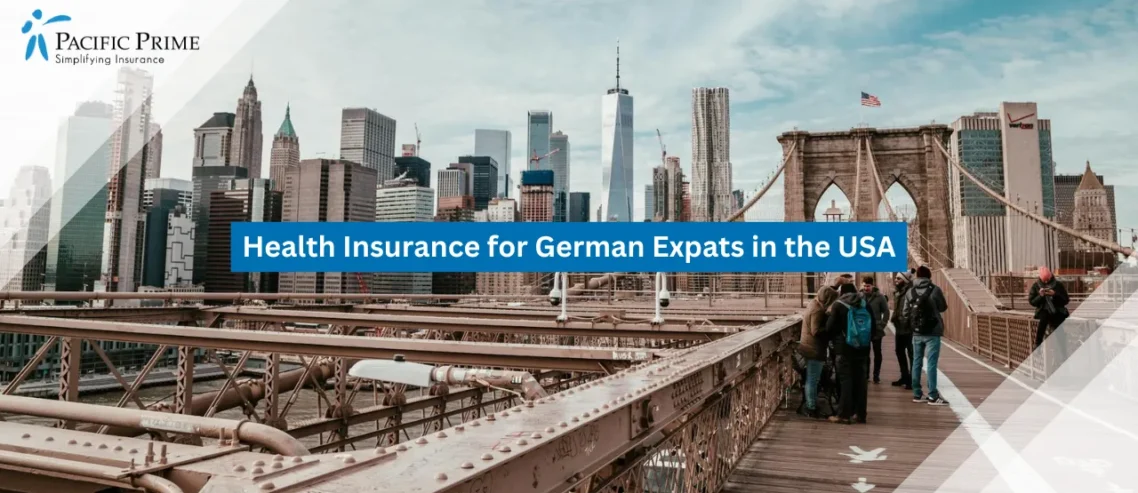
Health Insurance for German Expats in the USA
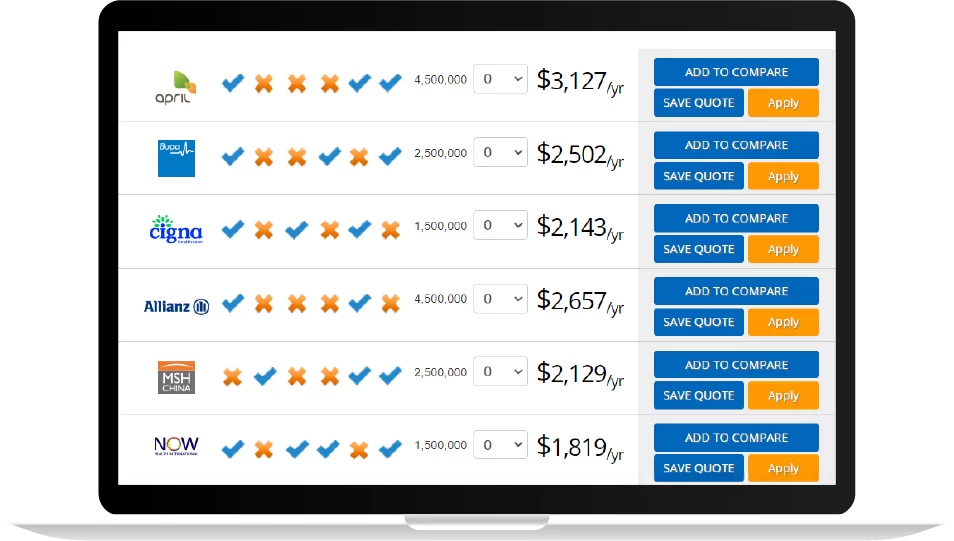
Allianz, April MyHealth, Cigna Global, IMG, and Liberty Mutual are five top health insurance providers well suited for German expats living in the USA. These insurers offer a variety of plans for meeting the diverse healthcare needs of expats navigating the complex US healthcare landscape.
Discover the world's top
health insurers.
Compare quotes with
a click of the button.
Can my German public insurance cover me in the USA? Which health insurance plans provide the best coverage for expats? What essential benefits should I look for as an expat or retiree living abroad? In this article, you will find clear answers to these questions and much more.
The United States does not provide universal public healthcare as many developed nations do. US medical expenses are among the highest worldwide, making international health insurance one of the most costly but indispensable investments for expats.
Overview of the American Healthcare System

The United States relies primarily on public healthcare programs, including Medicare and Medicaid, to provide health coverage to eligible populations.
Medicare, a federal health insurance program, is mainly for individuals aged 65 and older or for those with certain disabilities. Medicaid, a joint federal and state program, is for supporting low-income individuals and families.
Healthcare delivery in the US is structured with hospitals typically handling inpatient and emergency care, while clinics and private practices focus on outpatient services.
General practitioners (GPs) are often the first point of contact, managing routine and preventive care, while specialists handle complex medical conditions. In rural areas, specialist access can be limited, leading public clinics and community health centers to fill gaps in care.
According to the World Health Organization, the overall quality of healthcare in the US ranks below that of many other developed countries. This ranking highlights issues such as unequal access and high costs that affect the healthcare system in the US.
That being said, many hospitals in the US are globally recognized for clinical excellence, research, and teaching. Some of the most renowned healthcare institutions in the country include:
Health Insurance Requirements for Expats in USA
Expats, including those from Germany, must secure adequate health insurance while residing in the US due to the absence of universal public healthcare. Programs like Medicare or Medicaid are usually restricted to permanent residents or qualifying visa holders, limiting eligibility for many expats.
German expats need to obtain comprehensive private or international health insurance plans that meet both visa requirements and financial protection needs, given the high costs of medical care in the US.
Ensuring proper health insurance coverage is critical not only for meeting legal visa obligations but also for safeguarding against expensive medical bills and accessing quality healthcare throughout the stay in the United States.
Can German Expats Use Public Healthcare in the USA?
Many expats, including Germans, are unable to utilize public health coverage in the United States. While emergency care is available regardless of insurance, regular access requires appropriate coverage.
Eligibility for public healthcare in the US is influenced by factors such as residency status, visa type, and social security qualifications, which often limit access for many expats, necessitating private insurance.
To qualify for programs like Medicare (generally for those aged 65 and older or individuals with disabilities) or Medicaid (depending on income and state-specific regulations), applicants must possess lawful permanent resident status (Green Card) or be counted as a resident alien for tax purposes.
Applicants need to submit documentation including a passport, visa or residency permit, Social Security Number (SSN), and proof of income and address. Temporary or non-immigrant visa holders typically cannot access public healthcare programs.
To apply for public healthcare access in the US, follow these steps:
- Assess eligibility based on immigration and residency status.
- Submit applications to the appropriate agencies (State Medicaid office, Social Security Administration for Medicare).
- Provide necessary documents: personal identification, residency verification, proof of income.
- Wait for processing and approval; Medicare usually has a designated enrollment period.
- Note that copayments and deductibles vary by program and state.
As a result, most expats, including German expats, must depend on comprehensive private or international health insurance to fulfill visa requirements and ensure access to medical care during their time in the US.
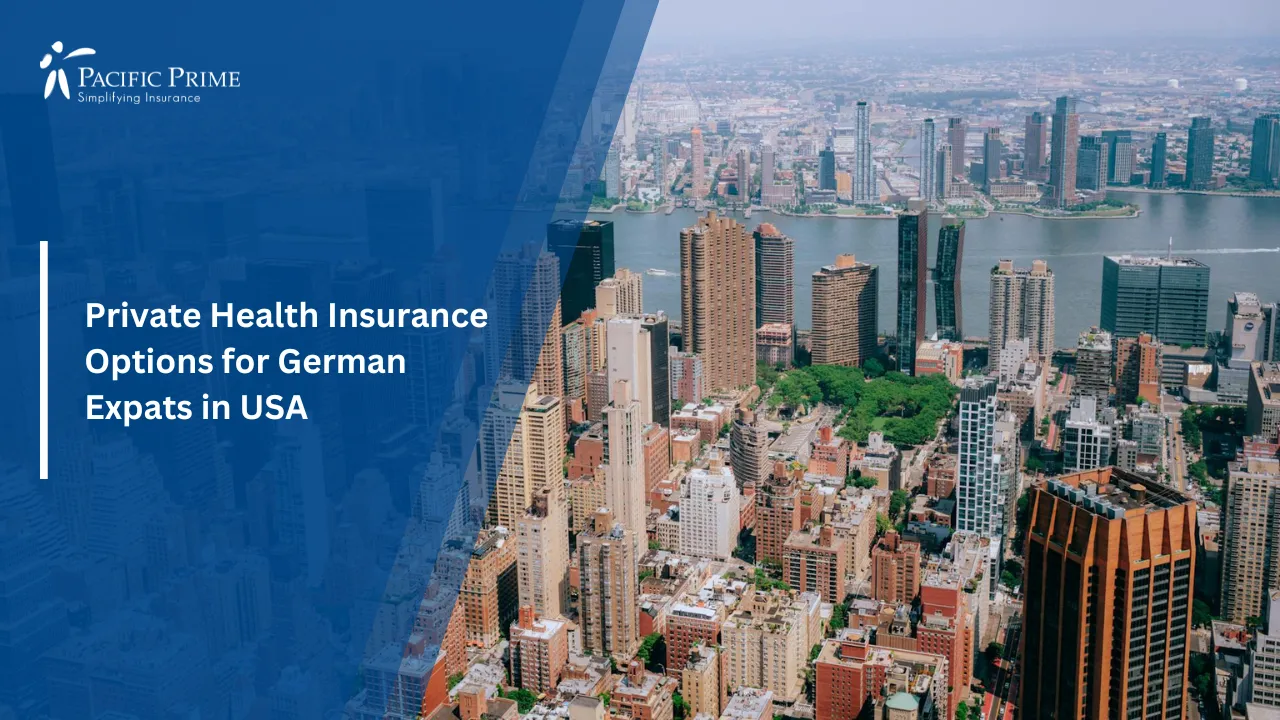
Private Health Insurance Options for German Expats in USA
We recommend Allianz, April MyHealth, Cigna Global, IMG, and Liberty Mutual to German expats in the United States for meeting their health insurance needs.
Private health insurance is essential for German expats in the US, due to the high cost of medical treatment and the limited public health coverage available to them.
Although private insurance is not mandatorily required by US visa regulations, it is strongly recommended as a practical necessity to avoid significant financial risk from medical expenses.
When selecting private health insurance, German expats can choose between local US insurers and international providers:
- Local insurers offer plans tailored to the US healthcare market, with extensive networks across hospitals and specialists, typically providing strong domestic coverage.
- International insurers provide broader global coverage, including benefits like emergency evacuation and repatriation, making them suitable for expats who travel frequently or may relocate again internationally.
Allianz
Allianz offers a variety of comprehensive international plans that encompass inpatient and outpatient care, maternity benefits, and medical evacuation services. Their flexibility allows expats to customize coverage according to their specific healthcare needs and budgets.
| Plan | Coverage Scope | Annual Limit | Deductible | Outpatient Care | Maternity Coverage | Evacuation |
| Core | Global | Up to EUR €8,554,000 (USD $10 million) | EUR €428 (USD $500)–EUR €2,139 (USD $2,500) | Included | Optional | Included |
| Elite | Worldwide | Unlimited | EUR €0–EUR €855 (USD $1,000) | Extensive | Included | Included |
April MyHealth
April MyHealth specializes in customizable expat insurance plans, blending US and global coverage. They emphasize flexibility, providing extensive outpatient care, maternity, and emergency evacuation features.
| Plan | Coverage Scope | Annual Limit | Deductible | Outpatient Care | Maternity Coverage | Evacuation |
| Essential | Global | EUR €4,277,000 (USD $5 million) | EUR €855 (USD $1,000) | Covered | Optional | Included |
| Premier | Worldwide | Unlimited | EUR €0–EUR €428 (USD $500) | Extensive | Included | Included |
Cigna Global
Cigna Global offers highly adaptable health insurance options for globally mobile expats. Their plans cover inpatient and outpatient services, maternity care, and evacuation benefits, allowing for broad personalization.
| Plan | Coverage Scope | Annual Limit | Deductible | Outpatient Care | Maternity Coverage | Evacuation |
| Silver | Worldwide | EUR €4,277,000 (USD $5 million) | Variable | Included | Optional | Included |
| Gold | Worldwide | Unlimited | Variable | Extensive | Included | Included |
IMG
IMG is known for international health insurance plans geared to expats and travelers, with coverage options including inpatient and outpatient care, maternity, and emergency evacuation.
| Plan | Coverage Scope | Annual Limit | Deductible | Outpatient Care | Maternity Coverage | Evacuation |
| Patriot Platinum | Worldwide | Unlimited | EUR €0–EUR €855 (USD $1,000) | Extensive | Included | Included |
| Global Medical | Global | EUR €4,277,000 (USD $5 million) | EUR €428 (USD $500)–EUR €2,566 (USD $3,000) | Covered | Optional | Included |
Liberty Mutual
Liberty Mutual offers US-based health insurance plans often suited to expats, with a focus on inpatient and outpatient services, maternity, and evacuation benefits tailored for the US healthcare environment.
| Plan | Coverage Scope | Annual Limit | Deductible | Outpatient Care | Maternity Coverage | Evacuation |
| Choice | US-focused | Variable | EUR €855 (USD $1,000)–EUR €4,277 (USD $5,000) | Included | Optional | Available |
| Premier | Comprehensive | Unlimited | Variable | Extensive | Included | Included |
Average Cost of Health Insurance in USA
For German expats residing in the USA, the health insurance landscape offers three primary categories of coverage, each with distinct cost implications: public health insurance, private health insurance limited to US coverage, and international health insurance (IHI) plans.
- Public health insurance such as Medicare and Medicaid serves select eligible populations, primarily US citizens, permanent residents, and some qualifying visa holders.Premiums under these programs vary widely by state and beneficiary category but are generally lower than private plans due to government subsidies. However, many expats do not qualify for these programs because of restrictive eligibility rules.
- Private health insurance restricting coverage to the USA provides comprehensive inpatient, outpatient, maternity, and emergency services within the country.Premiums for individuals generally range between approximately EUR €5,988 (USD $7,000) and EUR €12,831 (USD $15,000) per year. Deductibles and copayments vary depending on the plan but are often moderate to high.
- IHI plans offer extensive global coverage beyond the US, including maternity, medical evacuation, and repatriation. These plans typically come with higher premiums, averaging EUR €12,831 (USD $15,000) or more annually for individuals, with family plans exceeding EUR €29,084 (USD $34,000) a year.The added flexibility and portability make them suitable for German expats who travel frequently or plan to reside outside the US in the future.
| Insurance Type | Average Annual Premium (USD) | Main Features | Geographic Coverage | Typical Cost Notes |
| Public Health Insurance | Varies (generally lower) | Basic inpatient/outpatient care | US (limited to eligible recipients) | Subsidized, with copayments/deductibles |
| Private Health Insurance | EUR €5,988 (USD $7,000)–EUR €12,831 (USD $15,000) | Comprehensive care, US-based | USA only | Moderate to high deductibles and copayments |
| International Health Insurance | EUR €12,831+ (USD $15,000+) (individuals) | Worldwide coverage, evacuation | Global (including USA) | Higher premiums for extended coverage |
The USA remains the most expensive market globally for international private health insurance, with individual premiums surging notably in recent years due to rising medical inflation and increased healthcare utilization. Expats should carefully choose to balance coverage and budget effectively.


Top Considerations for German Expats in USA
German expats should arrange comprehensive private health insurance while in the US, given the absence of statutory coverage overseas, and carefully manage the re-registration process through the Federal Joint Committee upon returning to Germany to ensure seamless health insurance continuity.
German public health insurance coverage through the statutory system (Gesetzliche Krankenversicherung, GKV) does not extend abroad. Therefore, expats must secure private health insurance once in the US, either through an employer-sponsored plan or international private insurance.
When preparing to return to Germany, re-establishing access to public health insurance requires interaction with the central authority responsible for healthcare matters: the Federal Joint Committee (Gemeinsamer Bundesausschuss, G-BA).
Returning expats must notify their previous public insurer or the relevant statutory health insurance provider to re-register. Proof of German residency, employment status, and prior insurance history are generally needed. This process must be started promptly for uninterrupted healthcare coverage.
If the expat had maintained private insurance while abroad, transitioning back to public insurance might require extra steps or waiting periods depending on the duration spent abroad and individual circumstances. Supplementary private insurance may be in order during the transition to prevent gaps.
How to Become Insured and Benefits of Using an Insurance Broker
Whether you opt for a public health program or private/international health insurance, as a British expat securing health insurance in the US generally involves the following steps:
- Select Your Coverage: Determine whether to apply for public programs like Medicare or Medicaid (if eligible), purchase private health insurance directly from insurers or through federal/state health exchanges, or acquire international health insurance.
- Gather Documents: Assemble necessary documents including your passport, visa or residency permit, Social Security Number (SSN), proof of address (e.g., lease or utility bill), and proof of income or employment.
- Apply: For public insurance, applications are submitted through government portals or offices such as the Social Security Administration for Medicare. For private insurance, applications can often be completed online via insurer websites or insurance marketplaces.
- Wait for the Decision and Activate Your Coverage: Processing times differ; private insurance typically activates upon the first premium payment, while public insurance applications can take weeks to process and issue coverage cards.
To save on premiums, consider the following options:
- Choose regional plans if you intend to stay long-term in a specific state.
- Opt for reasonable deductibles to balance monthly premiums with out-of-pocket costs.
- Avoid overlapping coverage if you already have travel insurance.
- Look into international plans if you may relocate again; international health insurance helps prevent re-underwriting, mitigating premium increases if your health status changes.
One major benefit of international health insurance is its portability. It often provides continuous coverage across countries without the need to reapply or undergo new health assessments, which is highly advantageous if you encounter health issues or have future relocations planned.
Why You Should Engage a Broker
While you can secure insurance independently, collaborating with an experienced insurance broker presents significant benefits, including a broader selection of plans, expert advice, continuous support, and added peace of mind. Additionally, working with a broker usually does not incur higher costs:
- Broader Access to Plans: Brokers enable access to numerous insurers and plan options, streamlining the process and ensuring comprehensive comparisons.
- Expert Guidance: Their familiarity with expat insurance products assists in selecting plans tailored to individual health needs, travel frequency, and budget.
- Cost Efficiency: Brokers are typically compensated by insurers, meaning their services and advice typically come at no additional cost to clients.
- Ongoing Support: Brokers aid with policy renewals, modifications, and claims, helping expats navigate complex paperwork and advocate for fair settlements.
- Peace of Mind: Knowing a trusted professional is guiding your insurance journey alleviates stress and confusion, particularly when adapting to healthcare systems abroad.
Frequently Asked Questions
Can German expats access public healthcare programs like Medicare or Medicaid in the USA?
German expats typically have limited access to public healthcare programs. Eligibility for Medicare and Medicaid is primarily restricted to U.S. citizens and permanent residents, leaving many expats reliant on private insurance for health coverage.
What are the top health insurance providers for German expats living in the USA?
The top health insurance providers for German expats include Allianz, April MyHealth, Cigna Global, IMG, and Liberty Mutual. These companies offer diverse plans that cater specifically to the needs of expats.
What key aspects of health insurance should expat retirees consider when selecting a plan?
Expat retirees should consider coverage for outpatient services, maternity care, emergency evacuation, and the deductible amounts. Comprehensive coverage that addresses their unique health needs is essential for ensuring adequate protection.
Why is direct billing an important feature for health insurance plans?
Direct billing simplifies the payment process for medical services, allowing healthcare providers to bill the insurer directly. This feature reduces out-of-pocket expenses and administrative hassle for expats seeking timely medical care.
How important is medical evacuation coverage for German expats in the USA?
Medical evacuation coverage is crucial for expats, providing necessary transportation to quality medical facilities in emergencies. This coverage ensures access to specialized care, which can be vital for serious health issues.
What advantages does engaging a broker offer when obtaining health insurance as an expat?
Working with a broker provides access to a wide range of insurance plans and expert guidance tailored to individual needs typically at no extra cost. They can streamline the selection process, offer ongoing support, and help navigate claims and renewals.
Conclusion
German expats in the USA have access to both public and private health insurance options. Many choose to supplement their public coverage with private health insurance for more comprehensive protection, while others find international health insurance provides the most extensive coverage.
Whether you’re considering travel insurance, expat health insurance, or international health insurance, assistance is available! With vast knowledge and international experience, we can tailor a solution that suits your needs, budget, and offers excellent value.
Moreover, our professional advice and support come at no charge! Reach out today for a consultation, a quote, or a free, no-obligation comparison of plans.
If Spain or Portugal are in your short list as well, be sure to check out our articles on health insurance for German expats in Spain and in Portugal for further insights.

Since joining Pacific Prime, Martin has become even more aware of the gap between the true value of insurance products and most people’s appreciation of it, and developed a passion for demystifying and simplifying matters, so that more people get the protection they need at a cost they can easily afford.
In his free time, Martin attends concerts of various genres, and plays the violin with piano accompaniment he pre-recorded himself or played live by his niece.
- The Cost of Living in Estonia - November 4, 2026
- Dental Insurance In Thailand For Expats: 2026 Guide - November 3, 2026
- 5 Things to Be Thankful for at Work - October 16, 2026
Comments
Comments are disabled for this post