

Health Insurance for German Expats in Italy
Italy’s top-notch public healthcare system offers universal medical coverage to both citizens and residents. German expats will need private health insurance to get their long-term visa to Italy, but once they are in Italy, they can continue with their private plan or switch to public care.
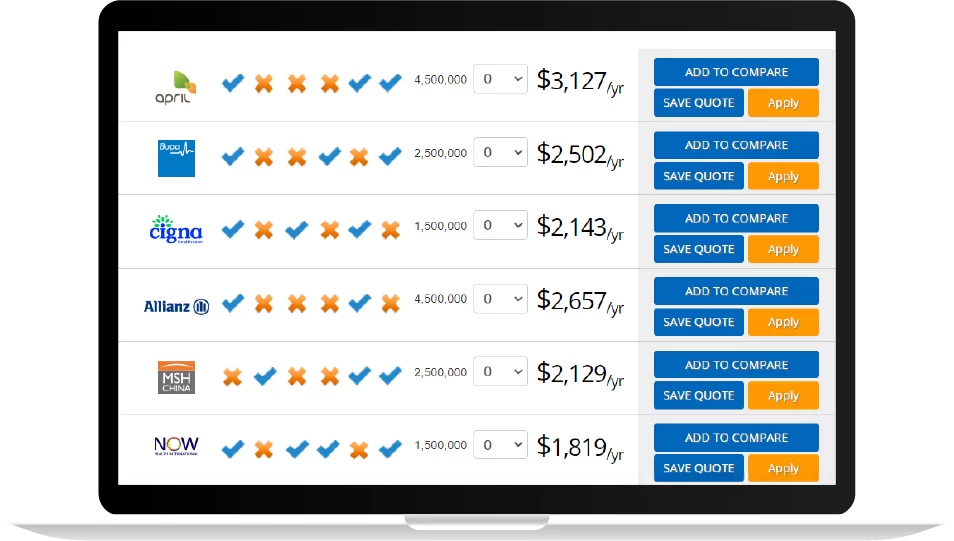
Discover the world's top
health insurers.
Compare quotes with
a click of the button.
How do I access Italy’s public healthcare system as a German expat? Do I need coverage beyond my European Health Insurance Card benefits? This article will answer these questions and more, helping you nail down bespoke coverage for your life abroad.
We’ll give you an overview of Italy’s healthcare system, outline health insurance requirements for German expats, explain Italy’s public healthcare, lay out the costs of healthcare coverage, suggest the top private insurance providers, and more.
If you’re looking for more information to get ready for your move to Italy, take a look at our article on the 20 best places to live in Italy for expats and digital nomads, or check out our free quote tool if you’re ready to begin comparing private insurance plans side by side. Let’s get started!
Understanding Italy’s Healthcare System
Italy’s public healthcare, overseen by the Servizio Sanitario Nazionale (SSN), is known as one of the best in the world. With free or subsidized universal healthcare, which both Italian citizens and permanent residents can use, as well as high standards of care, it’s no wonder it’s highly regarded.
The public healthcare sector takes center stage in medical care across Italy, with foreign residents and citizens receiving free care for most primary care, inpatient care, and health screenings.
Italy offers statutory benefits for maternity care, home care, specialty care, preventative medicine, hospice care, and pharmaceuticals, but patients are responsible for copayments on procedures, specialty visits, and some outpatient medications.
Young children, pregnant women, patients with HIV and other chronic diseases, lower-income adults, and older adults are exempt from all cost-sharing.
Short-term German expats and other temporary visitors in Italy must pay for all medical care out of pocket, through private health insurance, or with their European Health Insurance Card (EHIC): they don’t qualify for public healthcare until they move to the country and apply for registration.
Both private and public healthcare facilities are considered good throughout the country, and you can read more about the best hospitals in Italy here.
Private Healthcare in Italy
Italy’s extensive public healthcare system makes much of the private healthcare available a luxury for many Italian citizens and residents. Still, German expats may prefer private healthcare to avoid long wait times, broaden their network of healthcare providers, and ensure higher comfort in care.
The Reciprocal Healthcare Agreement Between Italy and Germany
Short-term German visitors qualify for medically necessary treatment at Italian public medical centers through the reciprocal health agreement between the two countries. This coverage is not comprehensive, and even emergency care requires that German expats have an EHIC.
Expats should not rely on the care available through the reciprocal health agreement between these two EU countries. Use the summary below as a guide and then pick the appropriate coverage:
- Getting Care as a Short-Term Vacationer: Germans visiting Italy briefly can access public care with a European Health Insurance Card. This only covers emergency care at public hospitals and is not comprehensive. Travel insurance or international private insurance is still recommended.
- Getting Care as a Long-Term Visitor: Germans applying for long-term visas must show proof of private health insurance that meets Italy’s standards before they will be granted a visa. Long-term expats who register as residents in Italy can then apply for public healthcare coverage through the SSN.
Health Insurance Requirements for German Expats Moving to Italy
Private health insurance may be seen as a bonus once you’re in Italy, but it is a requirement to obtain your long-term visa to Italy. German expats need a private health insurance policy with coverage for at least €30,000, emergencies, and repatriation in order to get their visa.
More specifically, German expats applying for a long-term visa to Italy will need a plan that covers the following:
- The entire Schengen area
- At least €30,000
- Emergencies
- Repatriation
- Hospitalization
Make sure you get and keep the letter your insurance provider will give you that verifies your coverage: it is required documentation for your visa application.
Can German Expats Use Public Healthcare in Italy?

Anyone living permanently in Italy, including expats, can receive free or subsidized healthcare through the SSN. To qualify for public healthcare in Italy, expats must visit their nearest Azienda Sanitaria Locale (ASL) office and register with the Servizio Sanitario Nazionale (SSN).
To register with the SSN, expats will need:
- A residence permit
- An ID or a passport
- A codice fiscale (tax code)
- Proof of residence
The ASL then processes the application and verifies the individual’s eligibility. Once an expat qualifies for and registers with the SSN, they can choose a general practitioner and receive a temporary paper certificate until their official health card comes in the mail.
Getting Public Healthcare in Italy Through Germany’s S1 Form
An S1 entitles you to Italy’s state healthcare, but it is paid for by Germany. You may qualify for an S1 if you’re a resident in Italy and receive a German state pension or if you’re a frontier worker. To find out if you’re eligible, contact your local health authority in Germany.
As you apply for S1 coverage for Italy, gather the following to bring to your local health authority:
- Passport
- Tax identification number (codice fiscale)
- Residency certificate, through either a permit of stay or an application receipt
Once you have gotten your S1, you will receive a health card that is valid throughout Italy. This will mean you’re entitled to the same healthcare benefits as an Italian citizen.
Getting Public Healthcare in Italy Through Your European Health Insurance Card
The European Health Insurance Card (EHIC) generally offers only temporary, basic medical care, as the EHIC is meant for those on brief stays abroad, such as travelers. It allows German citizens to receive the same level of care at the same cost as Italian citizens.
German expats hoping to rely on their EHIC should remember that the care available is not comprehensive and is only meant for emergencies until they can make it back home for full treatment.
If German expats are moving to Italy with their family, each family member should have their own card. You can add your dependents, like a spouse or children, to your application when you apply, but only after you have entered your own details.
Private Health Insurance Options for German Expats
Private insurance gives German expats in Italy access to high-quality private healthcare facilities and is essential for receiving your visa. Private plans are often comprehensive and boast extra benefits, like dental and prescription coverage, that aren’t generally covered under the SSN.
You can purchase private health insurance from local Italian providers or international health insurance providers. Expats often find international health insurance to be the better option for their unique lifestyles, as these plans offer global portability and a worldwide provider network.
Average Cost of Health Insurance in Italy
Residents in Italy receive mostly free primary care, inpatient care, and health screenings under the SSN. Italy has established a list of essential levels of care, which are required by law to be free for all citizens and residents.
These free benefits include:
- Pharmaceuticals
- Preventive medicine
- Outpatient specialist care
- Maternity care
- Home care
- Primary care
- Hospice care
Those who qualify as vulnerable groups are also exempt from paying for services in Italy, with the following being categorized as vulnerable groups:
- Low-income older adults
- Children
- Pregnant women
- Patients with chronic conditions or disabilities
- Those with rare diseases
Those benefits that aren’t free through the SSN (such as some prescriptions) vary in price and by region but are still highly subsidized.
Cost of Private Health Insurance in Italy
The cost of private health insurance for expats in Italy varies widely, based on the type of coverage they choose, their health history, age, gender, and any copays or deductibles implemented into the plan.
A basic international plan may be as inexpensive as €26 per month, with family plans generally costing anywhere from about €1,300–2,300. Comprehensive international plans are often most expensive, with prices adding up to about €3,000 annually.
For a better understanding of the cost of international health insurance, check out Pacific Prime’s yearly infographic.
Recommended Health Insurance Providers for German Expats
The best providers for German expats in Italy include AXA, Allianz, April International, and Cigna. These providers offer international coverage for customizable, flexible care not just in Spain but worldwide, and their plans are designed specifically to fit the lifestyle of expats.
AXA for German Expats in Italy
AXA offers five ideal plans for German expats in Italy: Prestige Plus, Prestige, Comprehensive, Standard, and Foundation. With annual maximum benefit limits ranging from about €138,107–6,905,362 and great customer support, AXA is a favorite among expats.
Top AXA benefits include:
- Excellent Customer Support: Includes second medical opinions, virtual doctors, and mental health services.
- Core Benefits: Includes inpatient hospital charges and surgery, emergency cover, cancer care, ambulance transport, medical evacuation, repatriation, and diagnostic tests.
- High-Tier Benefits: Includes non-routine dental care, outpatient treatment, and chronic conditions.
- Add-On Riders: Includes outpatient treatment, tests, and vaccinations (for those plans where these are not included by default).
| Plan | Annual Benefit Limit (Euros) |
| Foundation | About €138,107 |
| Standard | About €1,381,072 |
| Comprehensive | About €2,071,609 |
| Prestige | About €2,762,145 |
| Prestige Plus | About €6,905,362 |
Allianz for German Expats in Italy
Allianz Care offers reliable international health insurance solutions for expats in Italy through their core plans: Allianz Care Base, Care Enhanced, and Care Signature. Choose from plans with benefit maximums of €2,157,926–4,315,851, and enjoy second medical opinion services.
Top Allianz benefits include:
- Round-the-Clock Customer Support: Includes 24/7 global support, Expat Assistance Program (EAP), and travel security services.
- Worldwide Coverage: Includes an optional exclusion for the US.
- Core Benefits: Includes inpatient treatment, day-care treatment, pre- and post-hospitalization treatment, local ambulance, medical evacuation, a maximum of 42 days of emergency treatment outside the area of coverage, diagnostic tests, and surgery expenses.
- Add-On Riders: Includes outpatient treatment, dental care, medical repatriation, and maternity care.
| Plan | Annual Benefit Limit (Euros) |
| Care Base | About €2,157,926 |
| Care Enhanced | About €3,452,681 |
| Care Signature | About €4,315,851 |
April International for German Expats in Italy
MyHealth plans from April International come in five coverage levels: Emergency, Formule, Essential, Comfort, and Premium. Annual maximum benefits start at about €215,793 and increase to unlimited with the top two tiers.
Top April International benefits include:
- Tech Services: Includes 24/7 telehealth services and a digital platform for policy and claims management.
- Core Benefits: Includes coverage for accidents and urgent medical situations, such as medical repatriation.
- High-Tier Benefits: Includes hospitalization for emergency and chronic illnesses and mental disorders, cancer treatment, and medical repatriation and transport.
- Add-On Riders: Includes outpatient treatment, maternity care, dental care, and optical care.
| Plan | Annual Benefit Limit (Euros) |
| Emergency | About €215,793 |
| Formule | About €431,585 |
| Essential | About €863,170 |
| Comfort | Unlimited |
| Premium | Unlimited |
Cigna for German Expats in Italy
Cigna Global uses its modular approach to make it easy for German expats to choose a customizable plan for their needs. Cigna’s three core levels of coverage (Silver, Gold, or Platinum) pair with optional add-ons and annual maximums ranging from about €863,170 to unlimited.
Top Cigna benefits include:
- Core Benefits: Includes inpatient treatment, pandemic and epidemic, ambulance service, mental health care, cancer treatment, and newborn care.
- High-Tier Benefits: Includes maternity coverage in the Gold and Platinum plans.
- Add-On Riders: Includes outpatient care, medical evacuation and repatriation, vision and dental care, and health and well-being.
| Plan | Annual Benefit Limit (Euros) |
| Silver | About €863,170 |
| Gold | About €1,726,340 |
| Platinum | Unlimited |
Top Insurance Considerations for German Expats Moving to Italy
German expats should remember that Italy requires comprehensive coverage for visa approval and that applying and qualifying for Italian public healthcare coverage can take several months. Beyond this, expats should also evaluate their health history, budget, and lifestyle.
- Visa Requirements: Most expats are required to purchase private health insurance that meets Italy’s requirements before they will be approved for a visa. After that, expats may prefer Italy’s subsidized public care.
- SSN Application Time: It can take a while to be approved for Italy’s public healthcare. If you plan on switching to SSN coverage, make sure your private plan covers you for long enough that you don’t have any lapses in coverage.
- Health History: Consider whether you have pre-existing conditions or a family history of diseases that need coverage beyond basic care. Some plans exclude pre-existing conditions, require a waiting period, or only cover them at a higher premium.
- Budget: Don’t just choose the cheapest plan available if it doesn’t suit your medical needs. Look over copays, deductibles, and annual maximums, along with your premium.
- Lifestyle: Expats should evaluate their lifestyle, such as if they enjoy adventure sports that will need extra coverage or if they travel often and need international coverage.
Tips to Save on Health Insurance Premiums While Living Abroad
German expats can save money on insurance premiums by using regional providers if staying long term in Italy, comparing plans carefully, customizing coverage, consulting with an insurance broker, and using a high-deductible plan.
1. Rely on Regional Italian Healthcare
German expats who plan to spend most of their time in Italy may consider choosing a regional, Italy-only plan, whether through Italy’s public healthcare system or through an Italian private insurer.
This coverage will not extend outside the country if you travel back to Germany or elsewhere, but regional and public costs are generally significantly lower than international plans.
2. Compare Plans from Different Providers
Compare a variety of plans from different health insurance providers before settling on a plan. Free quote tools can help simplify this process. When comparing separate plans, consider geographical coverage, annual limits, benefits covered, and exclusions.
3. Customize Your Health Insurance Coverage
Avoid paying for coverage you don’t need by customizing your insurance plan to your current and anticipated health needs. If you don’t need vision coverage, for example, select a lower-tiered plan that does not charge for these services, or select a plan that offers them only as optional riders.
4. Select a High-Deductible Health Insurance Plan
A high-deductible plan can help offset the cost of health insurance by allowing for a lower premium. Insurance companies pay less upfront for high-deductible plans, which shifts more of the financial risk to the policyholder.
5. Consult an Insurance Broker
Seeking help from an insurance broker helps German expats expedite the process of finding an affordable yet suitable plan; plus, brokers offer valuable services after expats have secured their plan.
Insurance brokers partner with more than one health insurance provider, so they are experts at finding bespoke plans for expats: brokers know the ins and outs of each plan and can offer the best option for each individual or family, not just the option a single provider would choose.
This not only saves expats money but time, since they don’t have to contact the insurers directly themselves. Brokers also understand and can help explain complex insurance jargon so expats know they understand their policy completely.
Even after securing a plan, expats can rely on their broker for help with administrative tasks, such as filing claims.
Frequently Asked Questions
How much is health insurance for expats in Italy?
If expats choose to register with Italy’s public healthcare, insurance costs are covered mostly by taxes and small copays for some services. If expats choose a private insurance plan, such as international health insurance, the price will depend on health history, age, gender, and coverage chosen.
Will my German health insurance work in Italy?
German health insurance will not work in Italy. German expats should instead purchase private health insurance that is local in Italy, international health insurance, or, once eligible, register for Italy’s SSN. Germans can, however, use their EHIC for temporary emergency care in Italy.
What are the negatives of healthcare in Italy?
Some individuals experience long wait times, certain areas of the country do not offer as high-quality care as others, and individuals may have a hard time finding a provider who speaks English or another language besides Italian.
Conclusion
Germans moving to Italy can benefit from the country’s extensive public Servizio Sanitario Nazionale system or rely on private insurance options, like international health insurance. We’ve outlined how international plans are best as you apply for your visa and outlined the top plans.
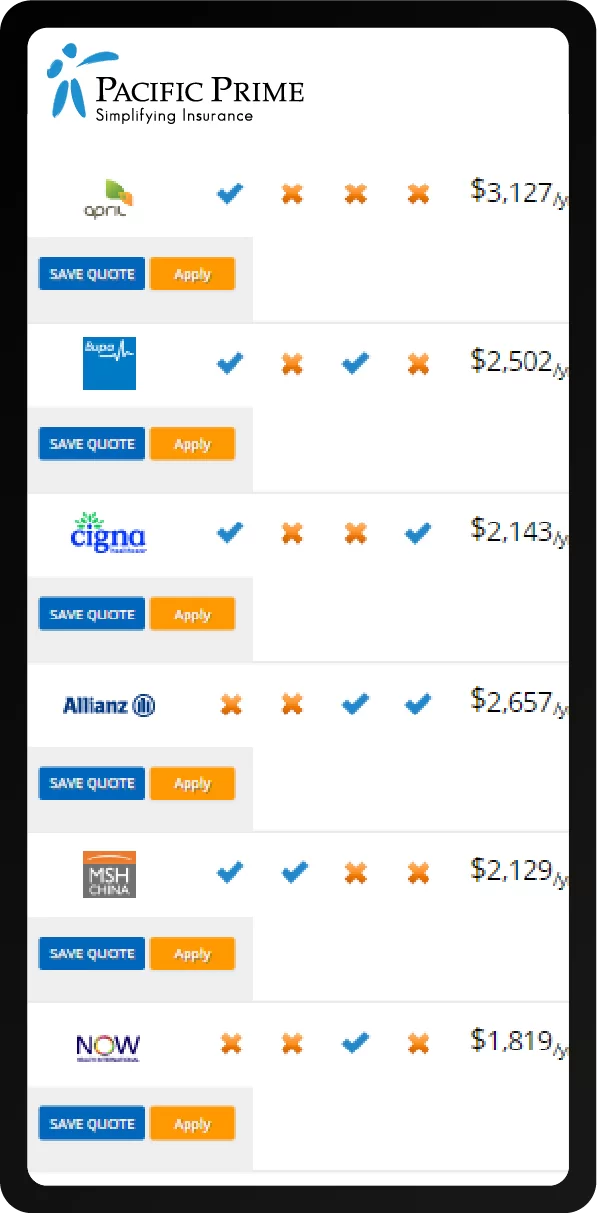
If you need help comparing quotes and settling on a plan, get some help from our expert brokers. They can not only fill you in more about Italy’s healthcare system and your options but also secure a plan that fits your lifestyle and even help with administrative tasks after you’ve got your plan.
Pacific Prime has over 25 years of experience helping expatriates find the best insurance solutions, and we partner with top-tier providers all over the world to get you and your loved ones reputable coverage.
We’re here to make your move a bit smoother. Give us a call at +1-800-868-1451. If you’re looking for other information to prepare for your move to Italy or you’re considering other locations abroad, look through our articles:
- Top Insurance Providers for Expats in Italy
- Top Travel Insurance Providers in Italy: Compare Plans
- Health Insurance for German Expats in Canada
- Health Insurance for German Expats in UAE

Serena earned her Bachelor’s Degree in Psychology from the University of British Columbia, Canada. As such, she is an avid advocate of mental health and is fascinated by all things psychology (especially if it’s cognitive psychology!).
Her previous work experience includes teaching toddlers to read, writing for a travel/wellness online magazine, and then a business news blog. These combined experiences give her the skills and insights she needs to explain complex ideas in a succinct way. Being the daughter of an immigrant and a traveler herself, she is passionate about educating expats and digital nomads on travel and international health insurance.
- An Expat’s Guide To East Coast Singapore - November 3, 2026
- Hospitals in New Zealand for Expats & Visitors (2026 Guide) - October 16, 2026
- Top 9 Health Insurance Companies for Expats in Malta - October 7, 2026
Comments
Comments are disabled for this post