
The Cost of Living in Spain in 2026
The cost of living in Spain for a single person, including rent for a room in the city center, is €1,590 (USD $1,880), while a family of four living in a three-bedroom apartment in the city center pays €3,955 (USD $4,680). Compared to other European countries, Spain is relatively affordable.
Discover the world's top
health insurers.
Compare quotes with
a click of the button.
Thanks to the affordable cost of living, beautiful weather, delicious cuisine, and relaxed lifestyle, the country has been a popular destination for retirees, expats, and digital nomads from around the world.
In this Pacific Prime article, we break down the average cost of living in Spain, where to live, and how to best enjoy life in the country on a budget. We also go over the healthcare system in Spain and how you can ensure you have the right protection for yourself and your family.
How Much is the Cost of Living in Spain?
The average cost of living in Spain for a single person is about €1,590 (USD $1,880) monthly, while it would cost €3,955 (USD $4,680) for a family of four. This includes rent, groceries, utilities, public transport, education, and insurance.
In 2026, Spain’s average monthly salary is approximately €2,540–€2,670 (USD $3,000–$3,160). To live comfortably, a monthly income of €1,500–€1,800 (USD $1,775–$2,130) is recommended, depending on living costs.
For couples and families, a good monthly salary can range from €2,000 to €4,000 (USD $2,365–USD $4,730), depending on how many people are in your household. Most couples can live comfortably with an income of €3,000 (USD $3,550), while a family of four would need around €4,000 (USD $4,730).
When comparing costs of living in Europe, Spain has one of the more affordable costs of living in the European Union. For example, the cost of living in Germany is around 33% higher than in Spain (excluding rent). Rent in Germany is 25% higher than in Spain.
If you want to know more about another popular destination like France, you can check the cost of living in France article here.
Where to Live in Spain
Where you choose to live in Spain also depends on your intended cost-of-living budget, which varies significantly by location. Cities like Madrid and Barcelona are pricier, while Valencia and Seville offer more affordable housing and daily expenses.
Groceries, public transportation, and healthcare remain reasonably priced nationwide, making it possible to maintain a balanced budget while enjoying Spain’s quality of life. Here’s a comparison of how much rent is in Spain, based on whether it is inside or outside the city center:
| Inside city center | Outside of city center | |
| Three-bedroom apartment | €1,390 (USD $1,642) | €1,051 (USD $1,242) |
| One-bedroom apartment | €884 (USD $1,044) | €689 (USD $814) |
Most Affordable Cities in Spain
If you want to save more but live in a comfortable environment, these are some of the most affordable cities to live in across Spain:
- Alicante: Alicante has one of the lowest costs of living in Spain, with total monthly costs around €1,591 (USD $1,880) for individuals.
- Granada: Granada is a budget-friendly city that’s favored by many expats, with total monthly costs around €1,410 (USD $1,667) for individuals.
- Valencia: Valencia is an affordable city that has a mix of city and nature and an average monthly cost of living of €1,846 (USD $2,180) for individuals.
Most Expensive Cities in Spain
If you are considering moving to more urban areas, keep note that these areas can be more expensive to live in, and the rent may be higher than in other places:
- Barcelona: Barcelona is the most expensive city to live in in Spain.
- Madrid: Madrid is the second most expensive city after Barcelona.
- Seville: While expensive, Seville is more affordable compared to Madrid and Barcelona.
Managing Monthly Expenses in Spain
To manage your monthly expenses in Spain, create a budget plan and research the average costs of groceries, restaurants, housing, and other important utilities you will need. Here are some ways to manage your monthly expenses while living in Spain.
Utilities and Bills in Spain
Expect to pay around €85–€220 (USD $100–$260) to cover basic utilities like electricity, heating, cooling, water, and garbage. This does not include mobile phone plans and internet connection, which generally would cost around €16 and €29 (USD $19 and USD $34), respectively.
You can always find packages where both a mobile plan and internet connection are included to save on costs. Utilities and bills in Spain cost around 5–6% of your monthly salary, which is much cheaper than in other countries.
One way of saving on utilities is to take advantage of the off-peak electricity rates and run appliances during specific hours (12 a.m. to 6 a.m. on weekdays, all day on weekends). You can also use water-saving devices to reduce consumption.
Food and Groceries in Spain
In Spain, you can save more by bringing your own bags, as Spain charges for plastic bags. You can also find discount supermarket chains to get cheaper products. Groceries in Spain can cost around:
- €200–€300 (USD $236–USD $354) for a single person per month
- €400–€600 (USD $472–USD $708) for a couple per month
- €600–€800 (USD $708–USD $945) for a family of four per month
You can get local produce at much lower prices than in supermarkets by going to local markets. If you would rather eat out, here are the average prices for meals when eating in restaurants:
| Meal | Price |
| Three-course meal for two | €50 (USD $59) |
| Meal at an inexpensive restaurant | €15 (USD $18) |
| Meal at a fast food restaurant | €10 (USD $12) |
Transportation Costs in Spain
Public transport in Spain is reasonably affordable and efficient in most cities. The cheapest way to get around Spain is the bus, while trains are the most comfortable but not always the cheapest.
There are instances where it is cheaper to take a flight to another city than it is to take a train. In other cities, you can rent or purchase a bike and save on transportation costs.
Here are some of the average prices for transportation in Spain:
| Transportation Tickets | Price |
| Single bus ticket | €1.50 (USD $1.70) |
| Single train ticket (Madrid to Barcelona) |
€30–€60 (USD $35–USD $71) |
| Monthly transport pass | €60 (USD $71) |
You don’t need to have a car to travel comfortably in Spain, as public transportation is a convenient, fast, and cheaper alternative. But if you are considering getting a car, as of February 2026, gasoline costs around €1.45 (USD $1.71) per liter in Spain.
Entertainment and Leisure Costs in Spain
You can enjoy visiting museums and galleries in Spain, as they often offer discounted or free admission on specific days. Movie tickets cost around €7–€11.50 (USD $8.25–$13.50), while tickets to concerts, sporting events, or festivals may vary in price.
Gym memberships in Spain generally cost around €28–€60 (USD $33–$71) per month. The price varies depending on the location and services offered by the gym. But there are many parks and outdoor spaces available for running, cycling, and other recreational activities.
Healthcare Expenses in Spain
One attractive factor of Spain is the accessible healthcare for expats and foreigners. Spain’s public health system, the Sistema Nacional de Salud (SNS), provides citizens with a similar service as the National Health Service in the UK.
Because the SNS is a state-funded service, it can provide almost entirely free medical care to citizens in Spain. This is also available for expats so long as they are registered for the service. Once registered, basic health care for expats is free.
If you are not eligible for Spain’s state healthcare, the private healthcare system is also a good option for many expats. You will need to obtain private health insurance to avoid having to pay large medical bills for each medical treatment.
It is recommended for expats looking to migrate or work overseas to secure an international health insurance plan that covers their medical needs abroad, including in Spain. Here is a breakdown of common medical costs in Spain:
Cost of Medical Consultations in Spain
Here is a breakdown of the average costs of general doctor visits, specialist consultations, and emergency treatment in Spain:
| Type of Consultation | Cost from Private Sector |
| General Doctor Visit | €50–€100 (USD $59–$118) per visit |
| Specialist Consultation | €80–€150 (USD $94–$177) per visit |
| Emergency Treatment | €250–€500 (USD $295–$590) per treatment |
Costs of Common Diagnostic Tests in Spain
| Type of Diagnostic Tests | Cost from Private Sector |
| Blood Test | From €80 (USD $94) |
| X-ray | €75–€150 (USD $88–$200) |
| MRI | €200–€885 (USD $236–$1,043) |
| CT Scan | €120–€700 (USD $141–$825) |
| Ultrasound | €50–€200 (USD $59–$235) |
Cost of Inpatient Hospital Stays in Spain
As public healthcare is free in Spain, here is a breakdown of how much hospital stays are in private hospitals. Note that the cost is based on the type of room selected.
| Type of Room | Cost Per Night at Private Hospital |
| Private Room | €499–€800 (USD $588–$943) |
| ICU | €800–€1,800 (USD $943–$2,122) |
Surgical Procedures in Spain
Here are the approximate costs of common surgical procedures in Spain:
| Surgical Procedure | Approximate Cost |
| Appendectomy | €4,000–€6,000 (USD $4,715–$7,075) |
| Gallbladder Removal | €5,000–€7,000 (USD $5,895–$8,254) |
| Hip Replacement | €12,000–€18,000 (USD $14,150–$21,225) |
| Knee Replacement | €11,000–€16,000 (USD $12,970–USD $18,866) |
| Cataract Surgery (per eye) | €2,000–€3,000 (USD $2,358–$3,537) |
Costs of Medications in Spain
In Spain, medication costs can vary depending on whether you have public healthcare coverage and the type of medication. Here’s a general overview of the medication costs in different scenarios:
If you have public healthcare coverage:
- Prescription medication: Patients typically pay 40% of the retail price of their medication.
- Pensioners: Pensioners generally pay 10% of the retail price of their medication with monthly caps.
- Chronic illness medications: Patients may have reduced copayments for chronic illness prescriptions.
If you don’t have public healthcare coverage:
- Over-the-counter medications: These are generally affordable, ranging from €3 to €15 (USD $3.50–$18).
- Basic antibiotics: Prices for basic antibiotics can range from €5 to €20 (USD $6–$23.50)
- Chronic condition medications: Costs can vary greatly, ranging from €20 to over €100 per month (USD $23.50 to over $118)
Why Getting Health Insurance in Spain is Important
Health insurance is important because it protects you from high and unpredictable medical costs while ensuring access to quality care when you need it. Especially in Spain, healthcare expenses can add up quickly, and rising medical costs over time make paying out of pocket increasingly risky.
An international health insurance plan safeguards you both physically and financially, giving you access to reliable treatment without the burden of large, unexpected bills.
Education Costs in Spain
For expats, the tuition fees in English-speaking schools range from €520 to €800 (USD $613–$943) per month, depending on the region. In Barcelona, it is around €770 (USD $908) a month, while in Madrid it would cost €740 (USD $873). In Malaga, the tuition fees are lower, at €520 (USD $613) per month.
Spain offers childcare options in public, private, and international nurseries. Public schools in Spain have a high standard in education, and these schools are free for all children to attend, including expats.
Expats who want to have their children study in public schools in Spain must first register on the municipal register, or empadronamiento, at their local town hall. While tuition is free for public schools, you will have to pay for school books and extracurricular activities.
If you’re looking for an English-speaking school, Spain has international schools that teach an international curriculum, such as the International Baccalaureate (IB).
Healthcare & Insurance in Spain for Expats
Expats living in Spain can better access healthcare through private health insurance plans. Some visas to Spain, including the Digital Nomad Visa, require proof of health insurance coverage in order for the visa application to be accepted.
Healthcare in Spain for Expats
Healthcare in Spain is of high quality, and the system features both private and public facilities. Expats can use the public healthcare system for their medical needs, but unless they are covered by Spain’s public health insurance, they will pay out of pocket for their services.
Healthcare costs in Spain are lower than in other countries and regions, such as the United States, Singapore, and Hong Kong. Wait times are typically longer in public healthcare facilities than in private ones. Expats working in Spain can register with the Spanish National Health System.
Health Insurance in Spain for Expats
Expats moving to Spain can purchase health insurance from local or international health insurance providers. Many expats choose international health insurance providers due to their globally portable plans that they can take with them on their travels.
Popular international health insurance plans for Spain can be purchased from providers like Cigna, Allianz Care, AXA, and April International. Many of these plans are customizable, allowing expats to choose the benefits they need and not pay for the ones they don’t.
International health insurance can help cover the cost of healthcare services in Spain and grant expats access to private hospitals and clinics. International health insurance for Spain can cover a variety of healthcare services, such as:
- Inpatient and day-patient treatment
- Surgical costs
- Physician visits
- Mental health treatment
- Vaccinations
- Prescription drugs
- Medical evacuation and repatriation
- Repatriation of remains
- Dental and vision coverage
- Maternity coverage
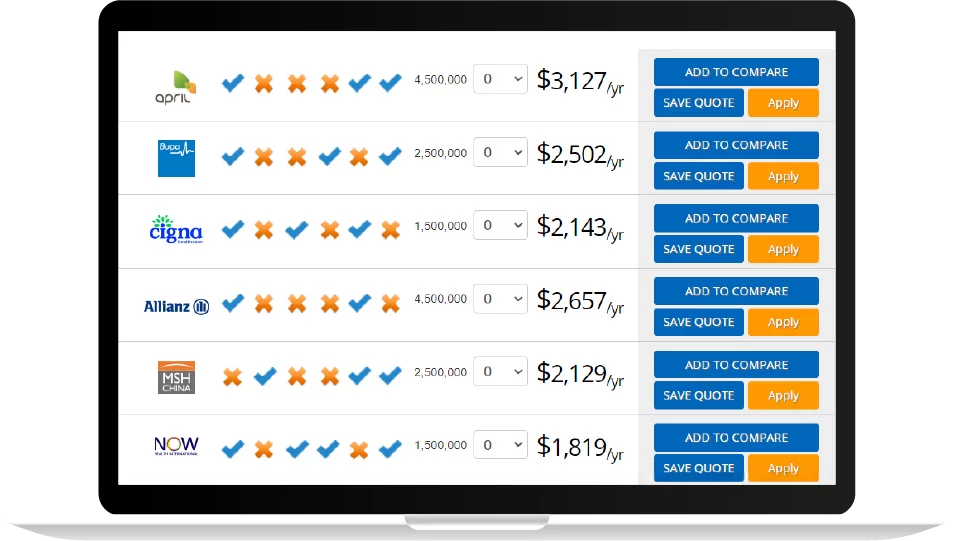
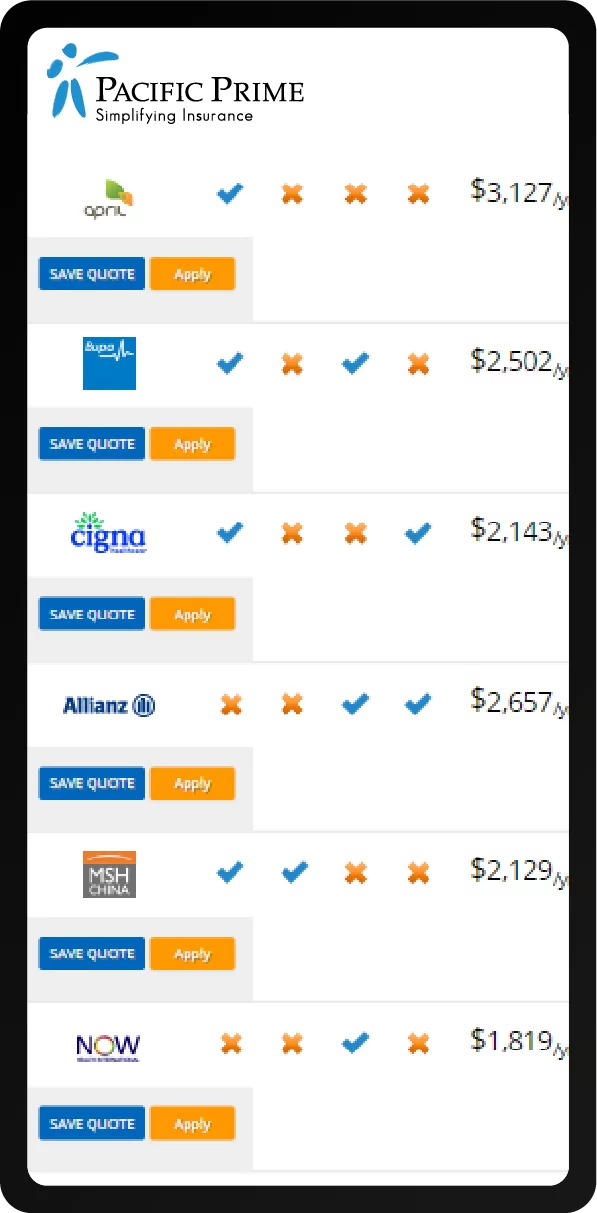
If you’re interested in learning more about recommended health insurance companies for Spain, read our article Top 10 Health Insurance Providers for Expats in Spain! If you’d like to begin comparing health insurance plans on your own, use our free quote tool.
Have Pacific Prime Help You With Your Move To Spain!
Moving to another country can be a daunting challenge, with language barriers, a mountain of paperwork, visa processing, and the healthcare system to navigate. You can ease the burden by having an insurance broker help you secure your health insurance.
Our team at Pacific Prime has over 25 years of experience in providing international health insurance, family insurance, and expat insurance to expats and their families across the globe. You benefit from our after-sales service; we will assist you in your renewals, claims, and more!
Contact us today for a free no-obligation comparison plan!
Frequently Asked Questions
How can I become a resident in Spain?
You can only apply for residency if you have lived in Spain continuously for five years. You can move to Spain under any available visa routes, and once you have lived in the country for the required amount of time and meet the requirements, you can obtain residency.
Which jobs are most in demand in Spain?
The most in-demand jobs in Spain are in technology and IT, healthcare, renewable energy, construction and skilled trades, hospitality and tourism, education, and language training.
Why do expats prefer Spain as their retirement destination?
Spain is a great place to live in if you are looking for a more relaxed lifestyle, especially once you retire. Its beautiful setting, warm climate, rich culture, affordable cost of living, and high-quality healthcare system are some of the factors that make Spain an attractive option for expats.
Why is it so cheap to live in Spain?
Spain has a lower cost of living compared to other European countries because of its economic conditions. According to the Organisation for Economic Co-operation and Development (OECD), the income per capita for Spain sits around €28,800 (USD $33,960), which is €3,000 (USD $3,537) below average.
What is the minimum wage in Spain?
In 2026, the minimum annual salary in Spain is €16,572 (USD $19,540), or €1,381 (USD $1,628) monthly, including prorated bonuses. For daily wage earners, their minimum wage is approximately €39.50 (USD $46.50) per day.

With her background as an avid traveler and as an exchange student in Spain, Palida values the benefits of insurance and understands the frustrations that may come with making the best decisions for your health and safety in an unknown environment. Here at Pacific Prime, she aspires to create content that will help expats and travelers understand international health insurance with ease.
In her spare time, Palida enjoys reading short stories as much as binging on sitcoms. She is also a self-proclaimed "foodie" with the goal of trying as many cuisines from all over the world as possible. Combining her passion for writing with her love for food, she is an aspiring Google Local Guide reviewer.
- GIG Gulf Insurance for Dubai Expats in 2026 - April 27, 2026
- Thailand Elite Visa 2026 Updated: Membership Options, Costs & Benefits - April 25, 2026
- How to Get Group Medical Insurance in Hong Kong (2026 Guide) - April 21, 2026

Comments
Comments are disabled for this post
We'll notify you
when our team replies!