
Mandatory Health Insurance For Expats In Thailand (2026 Guide)
Applicants for specific visa types, including the Long Stay Visa (O-A or O-X) and the Long-Term Resident Visa, must show proof of valid health insurance coverage, either from a local or international insurer, that meets the Thai government’s requirements.
Discover the world's top
health insurers.
Compare quotes with
a click of the button.
Not all expats need insurance to enter Thailand. Those visiting as tourists, working with permits, studying, or involved in diplomatic or charitable missions are generally exempt from mandatory coverage.
In this Pacific Prime article, we outline exactly who needs health insurance, under what conditions, and how to meet the visa requirements. By the end of this article, you will be ready to take the next steps regarding visa applications for your stay in Thailand.
When Health Insurance Is Required for Expats in Thailand
Expats are required to have health insurance in Thailand if they are applying for a retirement visa (Long-stay O-X and Long-stay OA) or for the LTR visa granting up to 10 years of validity. If you’re planning to retire in Thailand, our Thailand Retirement Visa Guide for US Citizens explains the eligibility criteria, financial requirements, application process, and ongoing obligations in greater detail.
It should be noted that for Non-Immigrant Visas O, O-A, and O-X, applicants who plan to exit Thailand and re-enter must also request a re-entry permit at least 15 working days before their departure from Thailand.
All visa applications can now be submitted online through the Official Thai E-Visa Website.
Health Insurance for O-A Long Stay Visa Applicants
Expats who are 50 years old or above and want to stay in Thailand for up to one year must apply for a Non-Immigrant Category O-A Long Stay Visa. This visa does not allow any kind of employment and requires Thailand health insurance for the duration of the visit to the country.
As a part of the application for a Non-Immigrant O-A Visa, expats must submit a health insurance policy that has proof of medical insurance in Thailand for the duration of the time that will be spent in the country.
You must have coverage for:
- Minimum coverage of USD $100,000 (~THB ฿3,108,950) per policy year, including coverage for COVID-19 treatment
- The entire duration of your stay in Thailand
You are allowed to get Thailand insurance from either a local Thai insurance company or a foreign insurance company. Since applicants can choose between different insurers and coverage options, comparing the best health insurance companies in Thailand can help you identify providers that meet visa requirements while also matching your healthcare needs.
To prove you have insurance, you must submit the following documents along with your visa application:
- Thai Insurance Company: If you contract with a Thai insurance company, you must submit the original insurance policy document.
- Foreign Insurance Company: If you contract with a foreign company, you must submit the original insurance policy document.
In addition to proof of their local or foreign insurance policy, every applicant must submit a Foreign Insurance Certificate that has been completed, signed, and stamped (by the insurance company).
When applying for a Long Stay Visa Category O-A, you must submit a medical certificate demonstrating that you don’t have any of the following prohibitive diseases:
- Leprosy
- Tuberculosis
- Drug Addiction
- Elephantiasis
- Third Phase of Syphilis
Health Coverage Rules for O-X Long Stay Visa
A Non-Immigrant Category O-X Long Stay Visa is for expats aged 50 and older who want to stay in Thailand for up to 10 years. Applicants cannot work while in Thailand, and a holder of this visa can stay in Thailand for 5 years at a time, with the option to renew once, for a total of 10 years.
Health insurance is mandatory to be approved for a Non-Immigrant O-X Visa in Thailand.
The requirements include:
- Outpatient treatment of no less than THB ฿40,000 (~USD $1,287)
- Inpatient treatment of no less than THB ฿400,000 (~USD $12,870)
- Must be for the complete duration of your stay in Thailand
You are allowed to get Thailand insurance from either a local Thai insurance company or a foreign insurance company.
To prove you have insurance, you must submit the following documents along with your visa application:
- Thai Insurance Company: If you contract with a Thai insurance company, you must submit two copies of the insurance policy document or the original insurance policy document with two copies (if available).
- Foreign Insurance Company: If you contract with a foreign company, you must submit the original insurance policy document along with two copies of it.
In addition to needing to submit proof of their local or foreign insurance policy, every applicant must submit a Foreign Insurance Certificate that has been completed, signed, and stamped (by the insurance company).
Health Insurance for Thailand’s LTR Visa
Thailand has recently created a new visa called the Long-Term Resident Visa. It is designed for four categories of foreigners, including digital nomads and wealthy expats. It is a renewable visa that can let you live in Thailand for up to 10 years, and it has mandatory health insurance requirements.
This new Long-Term Resident Visa is designed for the following foreign applicants:
- Wealthy global citizens
- Wealthy pensioners
- Remote workers (who want to work overseas from Thailand)
- High-skilled professionals
- Spouses and dependents of the four above types of individuals
If you are applying for this type of visa, you must have health insurance coverage with:
- At least USD $50,000 (THB ฿1,553,875) per policy year
- Social security benefits insuring treatment in Thailand, or at least USD $100,000 (THB ฿3,107,750) deposit
When Expats Can Enter Thailand Without Health Insurance
Expats who are traveling to Thailand for tourist purposes or diplomatic missions, have a work permit, are international students, or are in several other scenarios, aren’t required to get health insurance. Visa applications for these purposes do not require proof of health insurance.
Health insurance is not mandatory for the following foreign visitors to Thailand:
- Those visiting for tourist purposes
- Those on diplomatic missions
- Representatives for foreign governments
- Immediate family members of Thai nationals
- Non-Thai nationals who have been permitted to take up residency in Thailand
- Work permit holders and applicants
- Volunteers and NGO/charity workers
- Religious or missionary workers
- Non-Thai nationals entering for business or investments in Thailand
- International students
- Media production or filming workers
Frequently Asked Questions
Do expats need health insurance in Thailand?
In Thailand, health insurance is mandatory for certain visas, including retirement and long-stay (O-A, O-X, LTR) visas. Other expats aren’t legally required to have it, but coverage is strongly recommended due to private hospital costs and limited public access.
Can a German in Thailand receive health coverage?
Pacific Prime offers health coverage to any expat around the world, including Germans who have moved to Thailand. We have health plans that provide inpatient and outpatient care, emergency evacuation, dental and vision care, pre-existing conditions, and specialist consultations.
When is the best time to visit Thailand?
The best time of year to visit Thailand depends on what you like to do. In the summer, there are festivals, beaches, and aquatic activities in Phuket, Chiang Mai, and Koh Samui. In the winter, you can visit the night markets, museums, temples, and water parks in Bangkok, Hua Hin, and Pai.
Conclusion
Applicants for certain visa categories, including the Retirement Visa, Long Stay Visa (O-A or O-X), and Long-Term Resident Visa, are required to provide proof of valid health insurance from a local or international insurer that complies with Thai government regulations.
We highly recommend reaching out to an insurance expert at Pacific Prime. We have over 25 years of experience connecting our clients with the best insurance providers who offer coverage around the globe, including in Thailand.
The benefit of going to an insurance broker such as Pacific Prime over an insurance agent is that we work for you! It is our job to help you compare plans and negotiate on your behalf with the insurers until we craft a plan that meets your needs and makes you happy, not the other way around.

With her background as an avid traveler and as an exchange student in Spain, Palida values the benefits of insurance and understands the frustrations that may come with making the best decisions for your health and safety in an unknown environment. Here at Pacific Prime, she aspires to create content that will help expats and travelers understand international health insurance with ease.
In her spare time, Palida enjoys reading short stories as much as binging on sitcoms. She is also a self-proclaimed "foodie" with the goal of trying as many cuisines from all over the world as possible. Combining her passion for writing with her love for food, she is an aspiring Google Local Guide reviewer.
- GIG Gulf Insurance for Dubai Expats in 2026 - April 27, 2026
- Thailand Elite Visa 2026 Updated: Membership Options, Costs & Benefits - April 25, 2026
- How to Get Group Medical Insurance in Hong Kong (2026 Guide) - April 21, 2026

Comments
2 Comments
How can expats ensure their health insurance plan covers telemedicine services, especially for consultations with specialists not available locally? Are there any specific health insurance providers known for excellent expat support and coverage in Thailand?
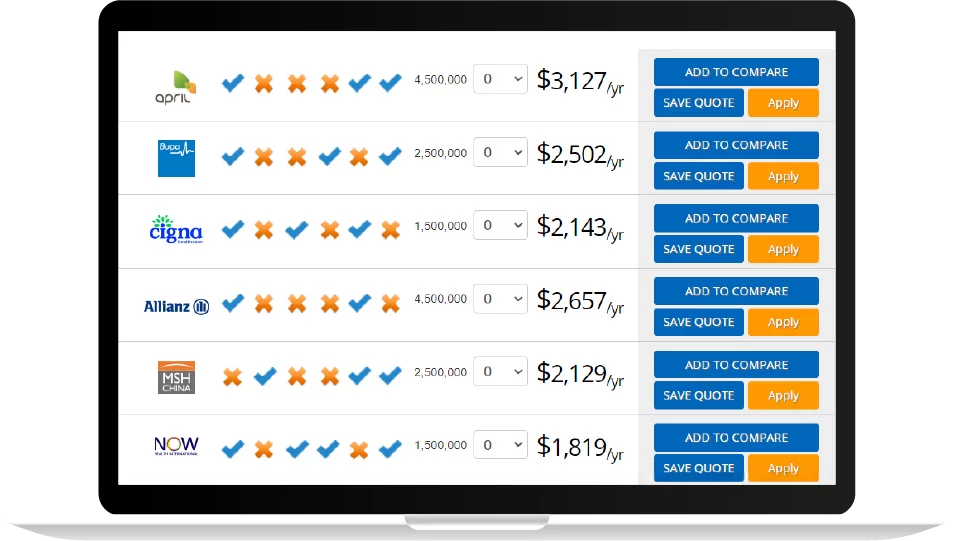
To ensure your health insurance plan covers telemedicine services, especially for consultations with specialists not available locally, verify that the plan explicitly includes virtual consultations under outpatient or specialist care. Look for plans from providers like Cigna, Allianz, and Bupa, which are known for offering excellent expat support and tailored coverage in Thailand, including telemedicine and region-specific health risks. For expert advice on finding the right expat insurance plan, contact Pacific Prime via our Contact Us page.
Ask a Question
We'll notify you
when our team replies!