
Thailand Retirement Visa Guide for US Citizens: Requirements & Steps
US citizens can retire in Thailand by applying for either a one-year Non-Immigrant O-A visa or a long-term Non-Immigrant O-X visa. Health insurance coverage and proper documentation are required, and retirees must follow reporting rules throughout their stay.
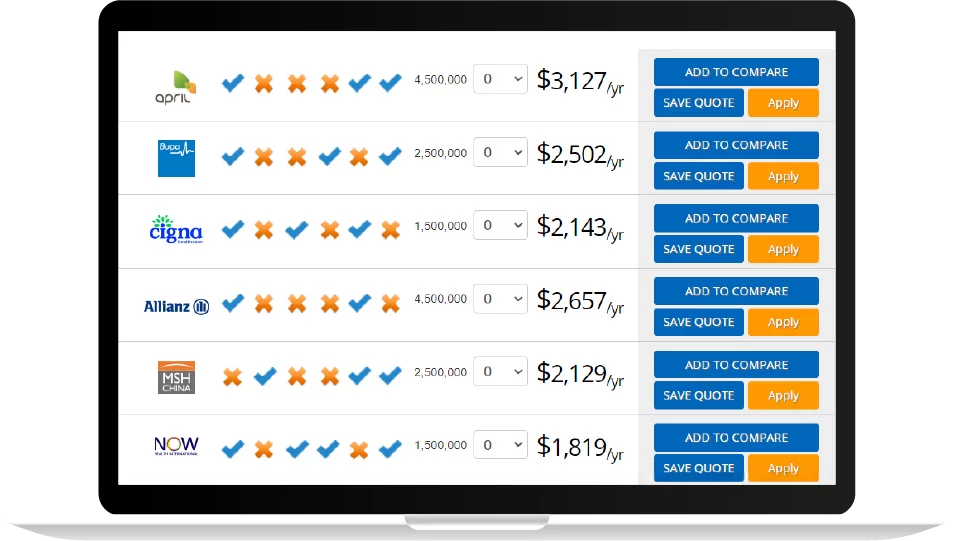
Discover the world's top
health insurers.
Compare quotes with
a click of the button.
This retirement visa guide explains how Americans can successfully secure long-term residency in Thailand, covering eligibility rules, required documents, and application steps to ensure a smooth transition and enjoyable retirement in Thailand.
Also known as a Non-Immigrant O-A visa, Thailand’s retirement visa is a long-term visa that is valid for one year. O-A visa holders are permitted to stay in Thailand for a one-year period, though they must report at the immigration office every 90 days. The other option is a Non-Immigrant O-X visa.
Regardless of which Non-Immigrant O visa you choose, you’ll need to know how to qualify for a Thailand retirement visa as a US citizen. Let’s start by looking at the requirements.
Thailand Retirement Visa Requirements for US Citizens
There are several qualifications that US citizens must meet in order to obtain a Thai retirement visa, including age and financial requirements.
Thailand Non-Immigrant O-A Retirement Visa Criteria
The following requirements are necessary for obtaining a Thailand retirement visa (or a Non-Immigrant O-A visa). The applicant must:
- Be at least 50 years of age
- Meet the financial requirements, which can be:
- A security deposit of THB ฿800,000 in their personal account in a local Thai bank. The amount must have been deposited in the bank for at least two months before the visa application.
- A pension or a monthly income of at least THB ฿65,000.
- Proof of a combination of the deposited amount in a local Thai bank and the yearly income that has a total income of THB ฿800,000.
- Be a citizen or permanent resident of the country they’re applying from.
- Have a passport with 6-month validity and two blank pages at minimum.
- Have an original Thailand bank book.
- Secure Thailand health insurance for US expats, for the duration of their stay.
Thailand Non-Immigrant O-X 10-Year Retirement Visa Rules
Similarly, the Non-Immigrant O-X visa is eligible for US applicants who wish to stay in Thailand for a maximum of 10 years without intending to work in the country. Even though the visa has a 5-year duration, it can be renewed once to provide a total validity of 10 years at most.
However, the financial requirements differ from the O-A visa. Non-Immigrant O-X visa applicants must have:
- A security deposit of at least THB ฿3 million in a local Thai bank account
- An annual income of at least THB ฿1.2 million
It’s important to keep in mind that, when declaring your monthly income for the financial requirement, you must obtain an affidavit from your embassy and consulate as proof. You may also provide an updated bank book and a bank statement that verifies your current balance for the last two months.
What’s more, remember that holders of either type of Thai retirement visa are not permitted to engage in any type of employment while living in Thailand. Now that you understand the requirements, it’s time to get familiar with the documents that you’ll need.
Health Insurance Requirements For Visa Application
Health insurance is legally mandatory in Thailand if you apply for certain types of long-term residence visas, such as the Long-Stay Non-Immigrant O-A, a Long-Stay Non-Immigrant O-X, or a 10-year Long-Term Resident (LTR) visa.
For further details on this topic, please feel free to see our other articles, Mandatory Health Insurance For Expats In Thailand (2026 Guide) and Expat Senior Health Insurance In Thailand in 2026.
Documents Needed for a Thailand Retirement Visa Application
Documents you will need for your Thai retirement visa application include a signed and filled-out application form, a passport, and passport-sized photos. Below is the complete list of documents:
- A passport with a minimum of six months of validity left and at least two blank pages. For one-year visa holders, the passport should be valid for a minimum of 18 months.
- A completed and signed Visa Application Form from the US Embassy or Consulate’s website. Alternatively, you can complete and sign the form in person when submitting your application.
- A completed and signed Retirement Visa Application Form.
- A passport-sized photograph.
- Proof of meeting the financial requirements (i.e. bank statements and a Letter of Guarantee from your local Thai bank).
- Notarized bank statements proving that your annual income meets the requirements.
- A notarized Police Certification from the US police authorities indicating no criminal record.
- A notarized Health Certificate issued no more than three months ago confirming you don’t have prohibited diseases, including Addiction (Drug/Alcoholism), Tuberculosis, Leprosy, Elephantiasis, or Third Phase Syphilis.
Speaking of documents, you can learn about what documents are required for a Thailand visa on arrival in our comprehensive article on the subject.
Thailand’s Elite Visa: Another Option For Retirees
The Thailand Elite Visa is another option for expats and travelers seeking long-term residence. This type of visa is a long-term, membership-based program entitling foreigners the right to live in Thailand for 5, 10, 15, or 20 years, depending on the Thailand Privilege Card membership tier.
What’s more, the program also offers VIP perks and benefits, such as expedited immigration processing at the airport, special gifts and discounts, and other assorted perks. There are five distinct membership tiers based on duration:
- Bronze: 5-year visa for THB 650,000 membership fee, with core benefits.
- Gold: 5-year visa for THB 900,000 with 20 lifestyle points (for concierge services and lifestyle perks).
- Platinum: 10-year visa for THB 1,500,000 with 35 lifestyle points.
- Diamond: 15-year visa for THB 2,500,000 with 55 lifestyle points.
- Reserve: 20+ year visa for THB 5,000,000 with 120 points (invite-only)
However, this type of visa does not grant automatic work rights, meaning you cannot legally accept local employment or obtain a standard Thai work permit, similar to other types of retirement visas.
Step-by-Step Thailand Retirement Visa Application Process
As a US citizen, applying for a Thailand retirement visa is fairly simple. You will need to contact the Thai embassy or consulate in which you applied, make an appointment, prepare all documents, submit, and wait. Below are the steps for applying for a retirement visa in Thailand with ease.
- Contact the Thai Embassy or Consulate where you will submit your visa application. If they have a website, you can refer to it for opening hours, payment methods, and other important information.
- Schedule an appointment if necessary.
- Prepare all the necessary documents for the Thailand retirement visa application.
- Submit your application with the required documents. Submission methods can vary depending on the Embassy or Consulate and can include:
- In-person submission
- Mail submission (including a prepaid and self-addressed envelope for returning your visa and passport)
- Wait for your retirement visa application to be processed.
- For applications via post, wait for your passport and visa to be mailed back. Otherwise, you can collect it yourself.
Thailand Retirement Visa Fees and Processing Costs
Thai retirement visa costs vary depending on the type of visa you choose. The standard processing fees for Thai retirement visas are:
- For a 1-year single-entry Thai retirement visa: THB ฿2,000
- For a 1-year multiple-entry Thai retirement visa: THB ฿5,000
- For a 5-year Thai retirement visa**: THB ฿10,000
Note that the Non-Immigrant O-X visa has a 5-year duration and can be renewed only once, offering a total validity of a maximum of 10 years.
Rules and Duties After Receiving Your Thailand Retirement Visa
Once you’ve secured your Thai retirement visa of choice, do keep in mind that there will be certain guidelines that you’ll have to strictly adhere to. These include reporting to immigration, the requirement for re-entry permits, and knowing that you can’t work in the country.
Below are key guidelines to keep in mind once you get your Thai retirement visa.
- Reporting to immigration: As a Thai Retirement Visa holder, you must report to immigration every 90 days. You can do so online, by mail, or at the Thai immigration office.
- Re-entry permits: If you wish to fly out of Thailand without canceling your visa, you must have a re-entry permit. You can get the permit at the nearest immigration office or at a Thailand international airport before you leave. If you won’t leave Thailand during your stay, a permit is not needed.
How To Renew Your Thailand Retirement Visa
You can renew your Thai retirement visa annually as long as you have sufficient funds in your bank account at least three months prior to the renewal process.
Steps For Your Annual Visa Extension
1. Submit the TM7 form: The TM7 is the form you use for visa extensions. You’re advised to start this process at your local provincial immigration office 30 to 45 days before your current visa expires, although you can begin much earlier.
You may find the online template of the form in this link.
2. Show proof of your finances and residence: At renewal, you must demonstrate that you have maintained a balance of 800,000 THB, or proof of 65,000 THB monthly income or pension, in the three months leading up to your renewal application. Proof of permanent residence is also required.
The current fee for a Thai Retirement Visa renewal is 1,900 THB (around USD $50).
Average Costs For Retirement In Thailand
Expats from all over the globe travel to Thailand for the country’s affordable cost of living, high standards of healthcare, incredible cuisine, and colorful culture.
However, to retire comfortably in Thailand, there are a number of factors to consider. Where you live heavily dictates your budget and lifestyle, so settling in the central city or beachfront areas will inevitably come with a much higher price tag.
Your personal lifestyle also matters, and you’ll be expected to spend more if you wish to maintain Western standards of living.
Average monthly costs range anywhere from 30,000–45,000 THB to 50,000 THB and over ($900–$1,500+ USD). You can cut back even further on spending by sticking to local cuisine when you dine out.
However, for a more luxurious lifestyle with frequent dining out, private central or beachfront rentals in large cities like Bangkok, and wellness treatments like spa or massage sessions, be prepared to spend upwards of 95,000 to 150,000 THB and over ($3,000–$5,000+ USD).
Here’s a general idea of your expenses for a given month:
- Rent: 9,000 to 40,000 THB ($270–$1,200 depending on location and type of housing)
- Food: 10,000 to 16,600 THB ($300–$500, cheaper if local)
- Utilities: 2,500 to 5,000 THB ($75–$150 for electricity, water, and internet access)
- Transportation: 1,600 to 5,000 THB ($50–$150)
Of course, these estimates don’t take into account other sources of spending, such as leisurely activities, travel, shopping, or health insurance, all of which vastly depend on your individual needs.
Healthcare costs in Thailand also significantly fluctuate based on your physical condition, requiring proper financial planning.
Here’s a general idea of healthcare spending for some common procedures in Thai private hospitals:
- General visits: 500–1,000 THB ($15–30 USD)
- Specialist consultations: 1,500–3,000 THB ($50–90 USD)
- Basic health check-up package: 2,000–9,000 THB ($55–60 USD)
- MRI scan (brain): ฿12,000-18,000 ($360–540 USD)
Although healthcare in Thailand is considerably more affordable than in many countries, unexpected major healthcare problems, such as surgeries or treatment of serious conditions like cancer, can easily set you back hundreds of thousands of baht, or even millions without insurance.
In general, you should expect to set aside around THB 40,000–120,000 ($1,200–$3,500 USD) annually for comprehensive health insurance premiums to protect against unexpected health expenses.
Keep in mind that insurance costs may skyrocket as you age, and if you’re over 55 and older, you may have to spend over THB 150,000 (around $4,300) and more annually for continued coverage.
Since navigating health insurance costs on your own can quickly become overwhelming, securing coverage through a broker like Pacific Prime simplifies the complex process of comparing policies and costs.
As an insurance brokerage, we leverage our network of insurers for a customized policy that aligns with your specific requirements and budget. Contact us for an obligation-free quote today!
FAQs About the Thailand Retirement Visa for US Citizens
What requirements must a US citizen meet to retire in Thailand?
Thailand retirement visa criteria for US citizens include age (50 years of age or above), financial requirements (monthly income of 65,000 THB or savings of 800,000 THB, and passport validity. Applicants must also secure an approved health insurance policy and obtain a medical certificate.
How long can a retirement visa holder stay in Thailand?
The Non-Immigrant O-A visa allows holders to stay in Thailand for one year,while the Non-Immigrant O-X visa offers a maximum of 10 years.
What is Thailand’s new 10-year retirement visa?
Thailand’s new 10-year retirement visa, or the Non-Immigrant O-X visa, allows applicants aged 50 and older who meet the requirements and don’t intend to work in the country to stay for a total of 10 years.
Conclusion
Fortunately, applying for a Thailand retirement visa is relatively simple as a US citizen. Once you’ve decided whether to apply for a Non-Immigrant O-A or O-X visa, gathered all the necessary documents, and completed the application process, all you have to do is wait for approval.
Health insurance for Americans in Thailand is mandatory for those who seek retirement in the country, and requires a minimum coverage of USD $10,000. Expats are encouraged to stay on top of mandatory health insurance requirements in Thailand in order to avoid unmanageable healthcare expenses.
As an experienced international health insurance broker with more than 20 years of experience, Pacific Prime has helped both expats and local citizens find health insurance plans that match both their budget range and unique healthcare needs.
Whether you’re an expat living in Thailand or a local Thai citizen yourself, our team of specialists will be more than happy to help you with impartial advice at no additional cost. If you have any questions, please get in touch with us or get a free quote here.

In 2024 and 2025, Teetad worked for two companies via internships, producing and assisting in the development of several PR advertising copies, brand strategy campaigns, and similar client-facing materials.
At Pacific Prime, Teetad leverages his background to create engaging, informational content that unlocks the mysteries of international health insurance, streamlining the process for getting the right coverage and support, wherever one may be.
In his spare time, you’ll often find Teetad wandering through shelves in a bookstore or the local library, setting off on a never-ending quest to fuel his next book obsession. Lately, he’s also taken a liking to small woodland creatures.
- Medical Insurance for Retirees in Thailand - August 14, 2026
- Best Dental Insurance Options in Thailand for Expats - August 5, 2026
- Thailand Prescription Drug Costs Without Insurance: A Global Comparison - August 5, 2026

Comments
2 Comments
What are some common challenges US retirees face when adapting to the healthcare system in Thailand? Are there any specific tax implications for US citizens retiring in Thailand that they should be aware of?
US retirees in Thailand often face challenges adapting to the healthcare system, such as navigating the dual-pricing model that charges foreigners more, understanding language barriers in public hospitals, and ensuring their private insurance meets mandatory visa requirements. Additionally, retirees should be aware of U.S. tax obligations, as they must still report worldwide income to the IRS, even while living abroad, and may benefit from the Foreign Earned Income Exclusion or foreign tax credits if applicable. To simplify healthcare and tax management, retirees are encouraged to work with international insurance providers and consult tax professionals specializing in expats.
For assistance with health insurance tailored to retirees in Thailand, contact us via our Contact Us page at Pacific Prime!
Ask a Question
We'll notify you
when our team replies!