

Health Insurance for Latin American Expats in Spain
Latin American expats can get Spanish healthcare through the government SNS scheme or through a private local or international insurance provider. Health care costs are typically slightly higher than in Latin American countries, but this depends on the plan, provider, and coverage benefits.
Discover the world's top
health insurers.
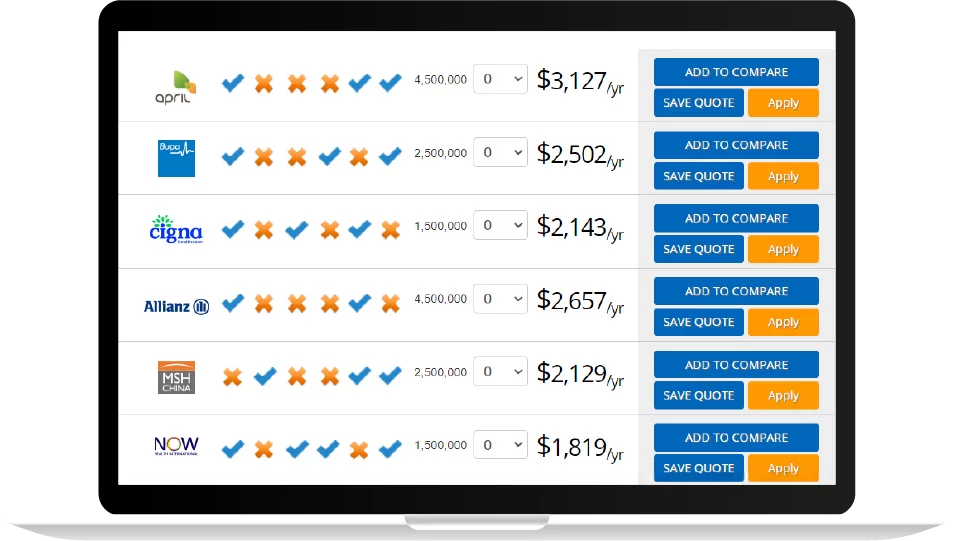
Compare quotes with
a click of the button.
Are you an expat from a Latin American country moving to Spain soon? Need help securing medical coverage for yourself and/or your family?
This article will detail your health insurance options, how much you can expect to pay, what visa types are available to you, and more! Learn all you can about health insurance in Spain for expats before you move to be as prepared as possible.
You can also learn more about your public, private, and international health insurance Spain options on our post about them.
Registering for Spain’s SNS as a Latin American
Latin American expats can register for Spain’s public healthcare system, the Sistema Nacional de Salud (SNS), once they obtain legal residency and register locally. This gives them access to heavily subsidized or free medical care through regional health services.
Spain’s SNS is funded through social security contributions and taxation, and it covers primary care, specialist visits, hospitalization, maternity services, and emergency treatment. However, access depends on employment status, residency category, or eligibility under special agreements.
To enroll in the SNS, Latin American expats typically need to complete the following steps:
- Empadronamiento Certificate: Register your address at the local town hall (ayuntamiento). This confirms residency within a municipality and is required before accessing most public services.
- Social Security Registration: If employed or self-employed, you must register with Spain’s social security system (Seguridad Social) to receive a social security number and healthcare eligibility.
- Healthcare Card Application: Apply for the Tarjeta Sanitaria Individual (TSI) at your regional health office, which grants access to public health facilities and assigned general practitioners.
Spanish vs. International Insurance Options in Spain
Latin American expats in Spain can choose between local Spanish private insurance plans or international health insurance policies, depending on whether they need Spain-only coverage or broader global protection and portability.
Local Spanish insurers typically offer affordable plans tailored to residents. Major providers include:
- Sanitas: One of Spain’s largest private health insurers, offering comprehensive plans with copayment and no copayment options plus extensive hospital networks.
- Adeslas: Backed by SegurCaixa, Adeslas provides competitively priced policies widely accepted for visa purposes.
- DKV: Known for digital health services and strong customer support, particularly appealing to expats seeking English-language assistance.
Compare these top Spanish local providers in more depth here.
International insurance plans, by contrast, are designed for mobility and flexibility. Global providers often allow treatment in Spain, Latin America, and worldwide, making them ideal for individuals who travel frequently or may relocate again.
Key differences include:
- Coverage Scope: Spanish plans typically cover treatment only within Spain, while international policies provide global or regional coverage.
- Portability: International insurance continues uninterrupted if you move countries, unlike local Spanish policies.
- Premium Structure: Local plans may cost USD $60–$230 (€50–€200) per month, while international plans often range from USD $140–$470 (€120–€400) per month depending on age and benefits.
The best option depends on your residency plans, family situation, and long-term mobility needs.
Read our list of the top international health insurance providers for expats in Spain here.
Insurance Cost Comparison with Latin American Countries
The cost of health insurance in Spain is very comparable to that in Latin America, with their averages overlapping at about USD $50–$150 monthly. Health insurance is generally more expensive in Spain, though, but this is because it often provides broader coverage and stronger consumer protections.
For comparison, private health insurance premiums in selected countries typically fall within these ranges:
- Mexico: Mid-level private plans often range from $50 to $150 per month for adults under 40, depending on deductible and region.
- Colombia: Private prepaid medicine plans can cost approximately $30–$120 per month, supplementing the public EPS system.
- Argentina: Private “obra social” or prepaid plans frequently range from $40 to$150 per month depending on provider and city.
In Spain, private insurance averages USD $60–$230 (€50–€200) per month for standard local coverage. Comprehensive international policies are higher due to broader benefits, including evacuation, international networks, and high annual limits exceeding €1 million.
While premiums may be higher in Spain, coverage often includes:
- No Lifetime Caps: Spanish and international policies usually do not impose lifetime payout limits.
- Regulated Standards: EU consumer protection laws ensure transparency and regulated policy terms.
- Advanced Infrastructure: Spain ranks highly for life expectancy at 83 years, among the highest in the EU.
Bilateral Healthcare Agreements in Spain
Spain maintains bilateral healthcare agreements with several Latin American countries, allowing certain citizens temporary or limited access to public healthcare under reciprocal conditions.
Countries with agreements include:
- Argentina: Agreement allows temporary visitors to access necessary healthcare under specific documentation.
- Brazil: Reciprocal arrangement provides limited emergency care rights.
- Chile: Certain workers and pensioners may benefit from coordinated coverage.
- Peru: Bilateral social security agreement includes healthcare coordination provisions.
These agreements typically apply to short-term stays or specific employment categories rather than long-term permanent residents. They do not replace the requirement for private insurance for visa purposes. Check with your country to see if they have an agreement.
Expats planning permanent residence in Spain generally must either:
- Contribute to Social Security: Gain access through employment-based contributions.
- Purchase Private Insurance: Secure comprehensive, no copayment coverage if required by visa rules.
Expat Visa Types and Insurance Requirements in Spain
Most Spanish visa categories require proof of valid health insurance, and the policy must provide comprehensive coverage equivalent to Spain’s public healthcare system without significant copayments or exclusions.
Common Spain visa types include:
- Non-Lucrative Visa: Requires private insurance with no copayments and full coverage in Spain for the duration of the visa. This is common among retirees from Latin America.
- Digital Nomad Visa: Requires either Spanish or international private insurance covering all risks in Spain.
- Student Visa: Requires health insurance covering the entire stay, though limited student policies may be acceptable.
- Work Visa: Employees contributing to Social Security gain access to the SNS, though initial private insurance may still be required before employment begins.
Authorities typically require insurance certificates in Spanish stating no waiting periods for basic services and no cost-sharing. Failure to meet these conditions can result in visa denial.
A Language Advantage for Latin American Expats in Spain
Latin American expats have a significant advantage in Spain because they share the Spanish language, which simplifies healthcare navigation, insurance applications, and medical consultations compared to many other expatriate groups.
Being fluent in Spanish reduces misunderstandings regarding policy wording, informed consent, and medical diagnoses. It also facilitates direct communication with doctors, insurance representatives, and government officials.
Practical advantages include:
- Easier Documentation Handling: Insurance contracts, visa paperwork, and medical forms are typically issued in Spanish.
- Smoother Doctor Visits: Clear communication improves diagnostic accuracy and patient confidence.
- Faster Administrative Processes: Fewer translation requirements reduce delays in residency or healthcare registration procedures.
However, regional languages such as Catalan, Basque, or Galician may appear in local documentation, especially in autonomous communities.
Latin American Community in Spain Overview
Spain hosts a large and growing Latin American community, offering strong cultural ties, shared language, and established support networks that ease integration for new arrivals.
According to Spain’s National Statistics Institute (INE), more than 2.5 million foreign residents in Spain are from Latin American countries, with significant populations from Colombia, Venezuela, Peru, and Ecuador.
Major population concentrations include:
- Madrid: The capital hosts the largest Latin American population, particularly Colombians and Venezuelans.
- Barcelona: A diverse Latin American community thrives in Catalonia’s capital.
- Valencia and Andalusia: Growing hubs for Ecuadorian and Argentine communities.
These established communities provide social networks, business opportunities, and informal support systems, which can be especially helpful when navigating healthcare and insurance decisions.
Frequently Asked Questions
What kind of health insurance do I need to live in Spain?
For residency in Spain, you must have a comprehensive private health insurance policy that provides full medical coverage without significant copayments or waiting periods and is valid for the whole stay, fulfilling visa requirements for non-EU citizens.
Can I use public health care as an expat in Spain?
Latin American expats can access Spain’s public healthcare only if they are legally resident and contributing to the Spanish social security system, otherwise private health insurance compliant with visa criteria is required before enrollment.
Conclusion: Coverage for Latin American Expats
Now that you’ve learned how Latin American expats living in Spain can acquire health insurance, you’re ready to begin comparing insurance plans and their benefits.
That’s where Pacific Prime steps in! We are an international health insurance brokerage with over 20 years of experience helping over a million and a half expatriates just like you secure healthcare coverage globally.
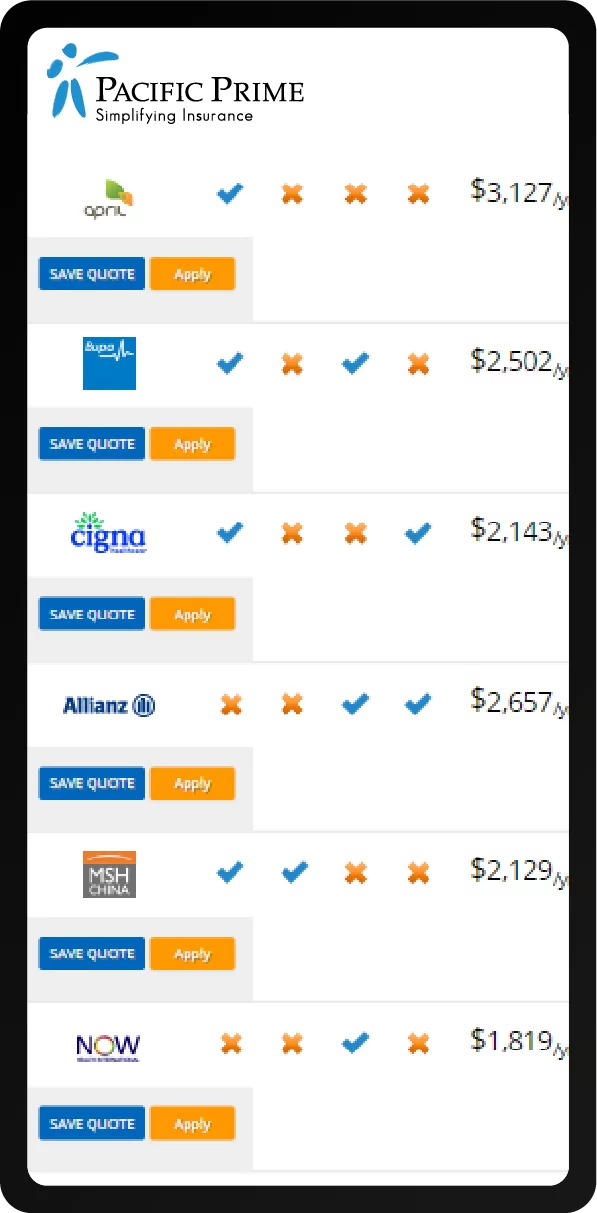
Utilize our exceptional online database that features over 50,000 expat-focused health insurance plans to begin comparing benefits, plans, quotes, and more! It’s a free resource anyone can use and you won’t want to miss!
When you’re ready to speak to an international insurance expert and find the plan that’s best for you, contact our team online or call +852-3113-1331.
We recommend expats and foreign citizens living in Spain reference the following links:
- How to Move to Spain From Latin America
- Living in Spain as a Latin American
- Health Insurance for EU Citizens Moving to Spain

Serena earned her Bachelor’s Degree in Psychology from the University of British Columbia, Canada. As such, she is an avid advocate of mental health and is fascinated by all things psychology (especially if it’s cognitive psychology!).
Her previous work experience includes teaching toddlers to read, writing for a travel/wellness online magazine, and then a business news blog. These combined experiences give her the skills and insights she needs to explain complex ideas in a succinct way. Being the daughter of an immigrant and a traveler herself, she is passionate about educating expats and digital nomads on travel and international health insurance.
- Health Insurance In Thailand for Foreigners in 2026 - August 24, 2026
- The Top 15 Best Places To Live In Dubai in 2026 - August 20, 2026
- A Complete 2026 Guide to Travel Insurance in Hong Kong - August 7, 2026

Comments
Comments are disabled for this post
We'll notify you
when our team replies!