
All You Need to Know About Family Life in Beijing for Expats in 2026
Beijing, China’s illustrious capital, presents an attractive prospect for expat families looking for an impressive cultural experience combined with modern conveniences, a high standard of living, no shortages of top-quality healthcare, and some of the world’s best international schools.
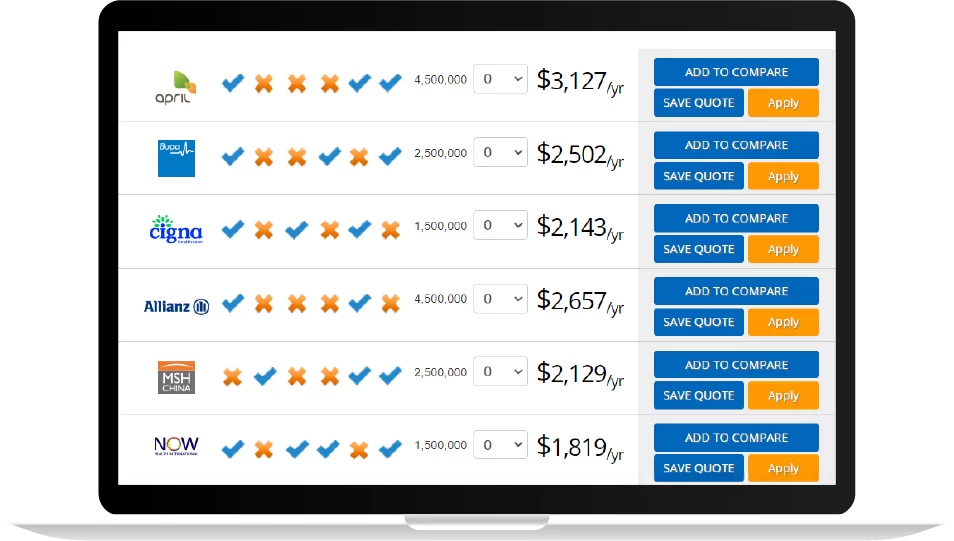
Discover the world's top
health insurers.
Compare quotes with
a click of the button.
Are you considering relocating your family to Beijing? Are you keen to gain insights into the expat experience in this dynamic metropolis?
This Pacific Prime article dives into the key factors for expat families in China, such as the cost of living, transportation network, leisure and lifestyle offerings, international school options, healthcare quality, and the importance of international health insurance coverage.
The Cost of Living in Beijing for Expat Families in 2026
It’s worth noting that the cost of living in Beijing is far lower than in Western cities. The average rent price in Beijing is approximately 56.1% lower than in London. Furthermore, the estimated cost of living in Beijing is around USD 669 per month, which is slightly cheaper than in Shanghai.
Beijing is one of the top cities in China for expats looking to work in China. One of China’s major hubs for finance, technology, and business, it’s also home to major historical landmarks such as the Great Wall of China, the Summer Palace, and the Forbidden City.
For a better idea of the average cost of living in Beijing, see the information below on the cost of meals, groceries, rent, transportation, and other utilities:
Cost of Drinks and Meals at Restaurants in Beijing
- Meal, Inexpensive Restaurant: RMB 30.00 (~ USD 4.40)
- Meal for 2 People, Mid-range Restaurant, Three-course: RMB 180.00 (~ USD 26.40)
- McMeal at McDonald’s (or Equivalent Combo Meal): RMB 35.00 (~ USD 5.13)
- Domestic Beer (0.5-liter draught): RMB 7.50 (~ USD 1.10)
- Imported Beer (0.33-liter bottle): RMB 14.50 (~ USD 2.13)
- Cappuccino (regular): RMB 21.21 (~ USD 3.11)
- Coke/Pepsi (0.33 liter bottle): RMB 3.86 (~ USD 0.57)
- Water (0.33 liter bottle): RMB 2.12 (~ USD 0.31)
Grocery Costs at the Market in Beijing
- Milk (regular), (1 liter): RMB 13.29 (~ USD 1.95)
- Loaf of Fresh White Bread (500g): RMB 12.01 (~ USD 1.76)
- Rice (white), (1 kg): RMB 8.71 (~ USD 1.28)
- Eggs (regular) (12): RMB 14.87 Milk (regular) (~ USD 2.18)
- Local Cheese (1 kg): RMB 92.50 (~ USD 13.57)
- Chicken Filets (1 kg): RMB 24.41 (~ USD 3.58)
- Beef Round (1 kg) (or Equivalent Back Leg Red Meat): RMB 78.77 (~ USD 11.55)
- Apples (1 kg): RMB 15.07 (~ USD 2.21)
- Banana (1 kg): RMB 12.02 (~ USD 1.76)
- Oranges (1 kg): RMB 13.05 (~ USD 1.91)
- Tomato (1 kg): RMB 10.07 (~ USD 1.49)
- Potato (1 kg): RMB 5.49 (~ USD 0.81)
- Onion (1 kg): RMB 6.30 (~ USD 0.92)
- Lettuce (1 head): RMB 4.63 (~ USD 0.68)
- Water (1.5-liter bottle): RMB 3.83 (~ USD 0.56)
- Bottle of Wine (Mid-Range): RMB 72.12 (~ USD 10.58)
- Domestic Beer (0.5-liter bottle): RMB 6.15 (~ USD 0.90)
- Imported Beer (0.33-liter bottle): RMB 12.57 (~ USD 1.84)
- Cigarettes 20 Pack (Marlboro): RMB 26.50 (~ USD 3.89)
Monthly Rental Costs (Apartments) in Beijing
- Apartment (1 bedroom) in City Center: RMB 7,492.22 (~USD 1,098.85)
- Apartment (1 bedroom) Outside of Center: RMB 3,928.12 (~USD 576.12)
- Apartment (3 bedrooms) in City Center: RMB 15,478.95 (~USD 2,270.22)
- Apartment (3 bedrooms) Outside of Center: RMB 8,057.89 (~USD 1,181.81)
Transportation Costs in Beijing
- One-way Ticket (Local Transport): RMB 4.50 (~USD 0.66)
- Monthly Pass (Regular Price): RMB 230.00 (~USD 33.73)
- Taxi Start (Normal Tariff): RMB 13.00 (~USD 1.91)
- Taxi 1 km (Normal Tariff): RMB 2.34 (~USD 0.34)
- Taxi 1 hour Waiting (Normal Tariff): RMB 49.00 (~USD 7.19)
- Gasoline (1 liter): RMB 7.72 (~USD 1.13)
- Volkswagen Golf 1.4 90 KW Trendline (Or Equivalent New Car): RMB 129,900.00 (~USD 19,051.81)
- Toyota Corolla Sedan 1.6l 97kW Comfort (Or Equivalent New Car): RMB 115,905.63 (~USD 16,999.32)
Monthly Utilities Costs in Beijing
- Basic (Electricity, Heating, Cooling, Water, Garbage) for 85 sq.m. Apartment: RMB 358.21 (USD 52.54)
- Mobile Phone Monthly Plan with Calls and 10GB+ Data: RMB 64.30 (USD 9.43)
- Internet (60 Mbps or More, Unlimited Data, Cable/ADSL): RMB 94.88 (USD 13.92)
How Expat Families Can Use Public Transportation in Beijing in 2026
Being the capital city, Beijing serves as the major transportation hub in mainland China for travel by air, rail, and road. In fact, China’s biggest airport is located in Beijing, as well as the country’s biggest rail hub.
The metropolis also has extensive highway systems, and the urban area boasts a well-developed transportation system to facilitate movement within the city.
Now, let’s take a closer look at Beijing’s transportation network, which includes air, train, buses, metro, and taxis.
Traveling by Air in Beijing
There are two passenger airports in Beijing, the first being the Capital International Airport located in the northeastern part of the city, about 25 kilometers (about 16 miles) from Tiananmen Square. The second is the Daxing Airport, located 53 kilometers (33 miles) south of the city center.
Both airports serve domestic and international flights and can be easily reached by airport shuttle bus, express metro train, and taxi. There are also long-distance buses that connect the two airports with nearby cities such as Langfang and Baoding.
Traveling by Train in Beijing
Unsurprisingly, Beijing is the center of China’s railway network with trains to most cities in the country. The key railway lines include the Jinguji Line to Kowloon, Hong Kong, the Jinghu Line to Shanghai, the Jingguang Line to Guangzhou, and the Jhinga Line to Harbin.
In recent years, Beijing has added an inner-city rail link to Tianjin, as well as high-speed rail lines to Shanghai and Guangzhou. This way, passengers can travel from Beijing to Tianjin in around 30 minutes, to Shanghai in around 4.5 hours, and to Guangzhou in 8 hours.
Beijing’s four railway stations can now handle approximately 800 trains per day, serving passengers arriving and departing from the capital.
Taking the Subway in Beijing
Beijing is home to China’s first subway line and station, with its inauguration way back in 1971. Nowadays, there are 29 active subway lines in operation, including two airport express lines and two tram lines.
Taking the subway in Beijing is one of the best ways to beat the traffic in the city, especially during rush hour.
Taking the Bus in Beijing
The sheer amount of bus lines in Beijing will amaze you, as over 1,200 bus routes are operating in the city, including two regular downtown lines, suburban lines, night lines, and intercity lines.
Payments by cash and Transportation Smart Cards are accepted. Speaking of the Transportation Smart Card, there are two types to choose from, which are the Beijing Yikatong Card and Beijing Hutong Card with “China T-Union”, which can be used in over 300 cities in the country.
Taking the Taxi in Beijing
About 67,000 taxis are operating in the Chinese capital. The flag-down rate starts around RMB 13 for the first three kilometers (2 miles). As with most cities in China, the driver will charge you by meter for travel downtown and flat rates for long-distance trips.
For example, an 8-hour taxi rental may cost around RMB 500-800. The trip cost from the inner city to the Badaling Great Wall will be around RMB 600-800 for a round trip.
Things to do in Beijing for Expat Families in 2026
Beijing has numerous attractions and activities for people of all ages. Expats living in Beijing can enjoy great shopping opportunities as well as a wide range of activities and entertainment venues.
Shopping in Beijing
Expats are spoiled for choice when it comes to shopping in Beijing, whether you’re looking for luxury products or cheaper market items. You can expect to find large shopping malls around the city, with bustling markets located around the outskirts.
Shopaholics can head to Wangfujing, which is undoubtedly the most popular shopping street in Beijing. Expats can expect to find everything from the spectrum, from international fashion brands to local Chinese items and electronic goods.
Other well-known shopping districts include Taikoo Li Sanlitun and Xidan Commercial Street.
Outdoor Activities in Beijing
For those who enjoy a little adventure, you can head to the Great Wall for some outdoor hiking. There are different sections with distinct surroundings, providing a once-in-a-lifetime experience.
For more leisurely activities, you can head to the city’s numerous parks, where you can learn to play mahjong, fly kites, and learn how to practice tai chi. Head to Beihai Park for its beautiful gardens and lake, Chaoyang Park for its vast lawns, and the old-world charms of Ditan Park.
Family-friendly Venues in Beijing
Popular activities for expat children include field trips to major attractions like the Forbidden City, Underground City, and the Great Wall of China. For a more modern attraction, head to the interactive Sony ExploraScience Museum.
The Grimm’s Fairy Tales-themed Shijingshan Amusement Park is another popular venue for families looking to enjoy a day out. Here, kids can enjoy activities like rafting, the Ferris wheel, and the Shenzou Coaster.
Popular Places to Visit in Beijing
Beijing is a sprawling megacity with a rich history. With so many places to visit, we’ve narrowed down some of the essentials here for you below:
The Great Wall of China: The Great Wall is massive, and there are various sites to visit. However, we recommend you visit Mutianyu, where there are cable cars that take you up to the wall.
The Temple of Heaven: Situated in the southern part of the capital, you will see locals exercising and practicing tai chi. Make your way to the east gate of the park, and you will find yourself right across the street from the Pearl Market.
Tiananmen Square and the Forbidden City: Expats in Beijing must visit Tiananmen Square and the Forbidden City. Connected geographically, these two provide one of the best sightseeing experiences in the city. The square itself is humongous, and so is the portrait of Mao Zedong.
National Museum of China: This is one of the largest museums in the world. Here, you can view a collection of over one million cultural relics stored in dozens of galleries. Boasting world-class facilities, you can expect exhibitions about Ancient China and the Road of Juvenation.
Panjiayuan Antiques Market: This is, without a doubt, Beijing’s most famous antique market. Here, you’ll discover a myriad of paintings, calligraphy works, jade, ceramics, furniture, coins, and Buddhist artifacts for sale among thousands of stalls.
798 Art Zone: Modern art enthusiasts, this is the place for you. Here, you can avoid all the tourists while appreciating some excellent modern art installations and exhibitions. There is a throng of nice restaurants and shops in and around this district, too.
International School Options for Expat Children in Beijing in 2026
If you’re relocating to Beijing with your family, chances are, you’ll have to enroll your children in an international school. It’s worth noting, however, that Beijing is one of the most expensive cities in the world for international education.
Despite that fact, Beijing’s international schools are among the best in the world. With this comes the best facilities and international programs, and their students achieve the highest grades. Thus, you can rest assured that the price is worth it.
Below is a list of the top 10 international schools in Beijing for your consideration.
AISB-Hope International
- Curriculum: American
- Language of Instruction: English
- Ages: 5-18
- Annual fees: RMB 148,000 – 276,000
3e International School
- Curriculum: International, Research-based
- Languages of instruction: English, Chinese
- Ages: 2-12
- Annual fees: RMB 206,000 – 228,900
Swiss School Beijing
- Curriculum: Swiss
- Language of Instruction: German
- Ages: 3-11
- Annual fees: RMB 193,000 – 254,000
Beijing BISS International School
- Curriculum: IB
- Language of Instruction: English
- Ages: 5-18
- Annual fees: The school does not disclose its fees to the public
The British School of Beijing, Sanlitun
- Curriculum: British
- Language of Instruction: English
- Ages: 1-11
- Annual fees: RMB 229,400 – 290,500
International School of Beijing
- Curriculum: IB, American
- Language of Instruction: English
- Ages: 3-18
- Annual fees: RMB 232,800 – 333,300
Western Academy of Beijing
- Curriculum: IB
- Language of Instruction: English
- Ages: 3-18
- Annual fees: RMB 232,200 – 355,000
Keystone Academy
- Curriculum: IB, American, Chinese
- Language of Instruction: English, Chinese
- Ages: 5-18
- Annual fees: RMB 260,000 – 402,500
Yew Chung International School of Beijing
- Curriculum: IB, British
- Language of Instruction: English, Chinese
- Ages: 2-18
- Annual fees: RMB 201,000 – 319,000
The British School of Beijing, Shunyi
- Curriculum: IB, British, German
- Language of Instruction: English, German
- Ages: 2-18
- Annual fees: RMB 229,400 – 342,800
Healthcare and Insurance in Beijing in 2026
There are public and private healthcare options available for expats in Beijing. Basic public healthcare is provided free through China’s social insurance scheme.
However, public healthcare facilities can be overcrowded with varying quality of care. On the other hand, private healthcare offers a wider range of services and generally higher quality, though at a higher expense.
Many expats opt for private international health insurance instead due to better quality of treatment, more services, and ease of finding English-speaking practitioners. The private route ensures better access to quality healthcare for expats in Beijing.
While private medical facilities are more expensive, having a private health insurance plan can help cover those costs. With private health insurance, you can access the private healthcare system, including international and VIP hospitals and clinics.
These private facilities offer several advantages, such as:
- Significantly cleaner environments
- Level of care comparable to Western countries
- Higher chances for English-speaking medical professionals
Expats can consider an international health plan that provides coverage not just in China, but also during travels to other countries. Adding an emergency medical evacuation rider ensures you can be transported to the nearest facility equipped to provide the best treatment.

Let Pacific Prime Take Care of Your Family in Beijing
Expats living in Beijing can enjoy a high quality of life, super convenient public transport, a never-ending list of activities to do and places to visit, world-leading international schools, and top-notch healthcare.
So if you’re planning to move to Beijing, it’s wise to consider comprehensive international health insurance plans to ensure you and your family have a smooth and problem-free life experience.
With over 25 years of reputation as a world-renowned insurance brokerage, Pacific Prime’s brokers are always on hand to provide you with tailor-made health insurance plans that match your specific needs and budget, all with impartiality.
Contact us today to compare quotes and get started on your Beijing expat journey!
Enjoyed this article? Check out our other articles here on expat health insurance plans in China:
Is Shanghai or Beijing Better for Expat Living?
The Best Activities for Expats in Beijing
Frequently Asked Questions
How much do you need to live comfortably in Beijing?
A family of four’s estimated monthly costs are RMB 16,119 (USD 2,224) without rent. A single person’s estimated monthly cost is RMB 4,420.7 (USD 610) without rent.
How much is a bottle of water in Beijing?
In China, premium bottled water typically costs about RMB 10 yuan per bottle, compared to the price of mass-market brands, which range from RMB 1 to 3.
Which bank is best for foreigners in China?
The major banking options available to foreigners in China include the “Big Five” Chinese banks: Bank of China, Industrial and Commercial Bank of China, Agricultural Bank of China, Bank of Communications, and China Construction Bank.

Since joining Pacific Prime, Martin has become even more aware of the gap between the true value of insurance products and most people’s appreciation of it, and developed a passion for demystifying and simplifying matters, so that more people get the protection they need at a cost they can easily afford.
In his free time, Martin attends concerts of various genres, and plays the violin with piano accompaniment he pre-recorded himself or played live by his niece.
- The Cost of Living in Estonia - November 4, 2026
- Dental Insurance In Thailand For Expats: 2026 Guide - November 3, 2026
- 5 Things to Be Thankful for at Work - October 16, 2026
Comments
Leave a Comment