

10 Countries that are Prone to Natural Disasters (2026 Updated)
Tourist hotspots such as the Philippines, Japan, Thailand, and Vietnam are prone to natural disasters that you may not be aware of. Natural disasters can strike unexpectedly at any point in time, and safety in countries that are prone to natural disasters is one area that should never be overlooked.
Discover the world's top
health insurers.
Compare quotes with
a click of the button.
In this article, we will go over the 10 countries that are prone to natural disasters and the importance of travel insurance to ensure your safety and well-being should you decide to travel anywhere that is prone to disasters.

The Philippines
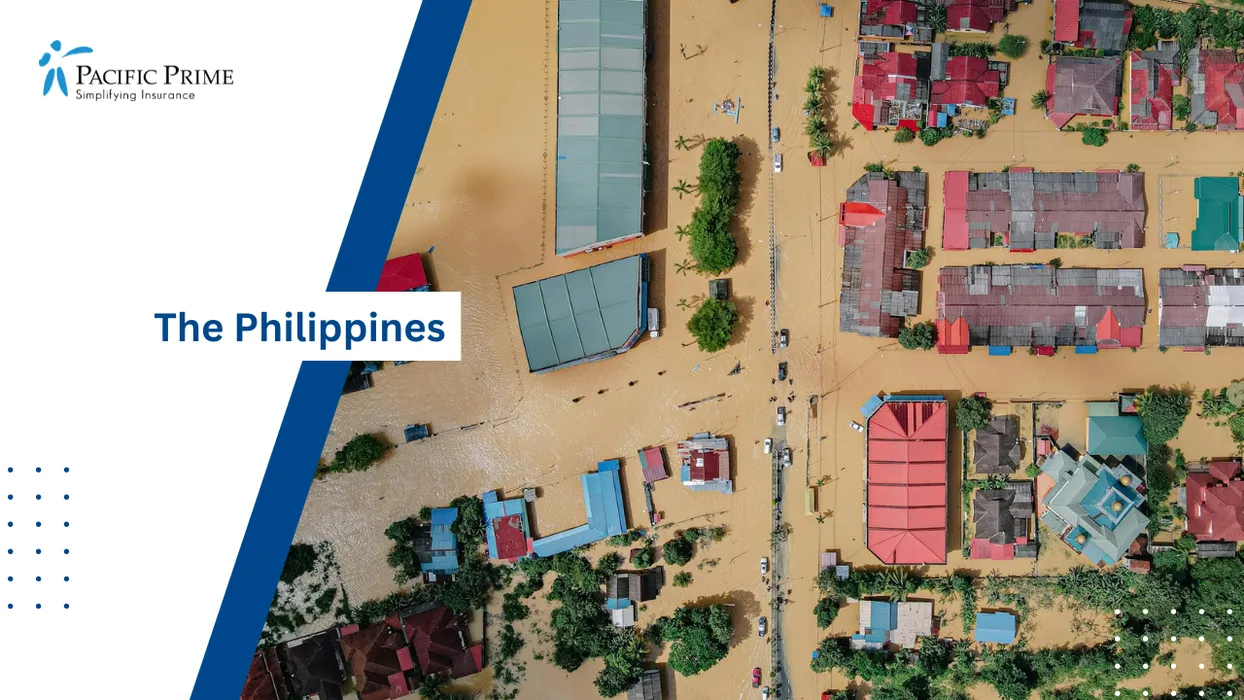
The Philippines is prone to natural disasters due to being located on the Circum-Pacific belt, otherwise known as the Pacific Ring of Fire, where most earthquakes and volcanic eruptions take place along the ring.
The Philippines has two major seasons: the rainy season from June to November and the dry season from December to May.
On February 6th, 2024, a landslide occurred following heavy rainfall in Maco, Davao de Oro, Philippines. At least 100 people were killed, 7,000 people were affected, and some even went missing.
At least 45 of the missing victims were also employees of local firm Apex Mining, to which employees waiting on buses leaving the mine were engulfed in the landslide.
Indonesia
Also located by the Pacific Ring of Fire, Indonesia has an even greater susceptibility to earthquakes than the Philippines due to being situated on three tectonic plates. Surrounded by the Pacific Ocean, the earthquakes also evoke tsunami waves that pose further danger to the country.
But there’s more than earthquakes and tsunamis. On March 13th, 2024, floods and landslides on Indonesia’s island of Sumatra affected up to 15,500 children and 40,000 families, making this Indonesia’s second major flood in a month. At least 263 people were killed, and over 11 went missing.
The monsoon season in Indonesia usually occurs between November and March, causing floods and landslides in Indonesia’s archipelago, consisting of over 17,000 islands.
India
27 of India’s 29 states are constantly exposed to floods, cyclones, droughts, earthquakes, and landslides. India’s susceptibility to natural disasters could be attributed to the country’s topographic features.
Examples include earthquake-induced landslides in the Himalayas, flooding-prone plains in the mainland, and tsunami waves caused by tectonic movements in coastal regions. There are also tropical cyclones that occur from May to June and October to November.
On October 4th, 2023, heavy rainfall in the South Lhonak Lake of North Sikkim triggered a flood in the Teesta. At least 42 people were killed in the flood, and thousands of people were displaced.
Mexico
Due to the country’s Pacific Coast being located in the Pacific Ring of Fire, Mexico is prone to natural disasters such as earthquakes, tsunamis, volcanic eruptions, and landslides. Additionally, earthquakes and tsunamis in Mexico also cause secondary disasters like flooding.
In line with much of the Caribbean, Mexico’s hurricane season lasts between June and November, with the most prominent activity being August to November. Severe storms, mudslides, landslides, and floods typically follow hurricanes and affect coastal areas the most.
Back in late October 2023, Acapulco, Mexico, was left in ruins with at least 27 people killed and four people missing as a result of Hurricane Otis hitting the coast.
Colombia
Due to the collision of the South American and Nazca Plates, Colombia is part of the Pacific Ring of Fire and the Andean Volcanic Belt. This makes Colombia even more susceptible to earthquakes and volcanic eruptions. Hurricanes can also affect the Caribbean coast.
Climate change also contributes to the country’s increased susceptibility to landslides and flooding.
Colombia has two rainy seasons–March to June and September to November; and the hurricane season occurs from June to November, during which floods, landslides, and rain can become problematic for travel plans.
On January 13th, 2024, at least 33 people were killed in a landslide resulting from intense rainfall in Northwestern Colombia. Additionally, a mudslide blocked a roadway connecting the cities of Quibdo and Medellin in the Pacific province of Choco.
Dozens of people were also injured on a busy highway, and some people went missing after mud engulfed countless cars on the road.
China
As China is located where the Eurasian, Pacific, and Indian Ocean plates meet, the country suffers from frequent earthquakes due to constant tectonic movements. Being a mountainous country, China’s mountainous regions and hilly areas are frequently hit by collapse, landslide, and debris flow.
China is susceptible to severe flooding due to intense rainfall, typhoons, and the monsoon season.
Since April 18th, 2024, China’s southeastern province of Guangdong experienced severe flooding as a result of intense rainfall. Four days later, four people were reported dead, while ten went missing and 110,000 residentswere evacuated.
On May 1st, 2024, a landslide on China’s Meilong Expressway killed up to 36 people and injured at least 30 more people. The fatalities occurred due to 20 cars plunging into the landslide scar, possibly at high speed, and some even caught fire.
Japan
Due to Japan’s archipelago (a group of islands) being located along the Ring of Fire, where various tectonic plates meet, Japan is susceptible to natural disasters such as earthquakes, tsunamis, and volcanic eruptions.
Japan’s precipitation also varies occasionally and is especially concentrated during the rainy and typhoon season. Heavy rainfall and flooding are often caused by typhoons, which regularly hit Japan, and tropical cyclones tend to approach Japan’s archipelago between July and October.
On January 3rd, 2024, a series of powerful earthquakes in western Japan killed at least 62 people as rescue workers struggled to save those trapped under the rubble of collapsed buildings. Additionally, water, electricity, and cell phone services were also down in some areas.
Bangladesh
Bangladesh’s geographical location, land characteristics, multiplicity of rivers, and monsoon climate make the country extremely susceptible to natural disasters. Some of the natural disasters in Bangladesh include floods, cyclones, earthquakes, and tsunamis.
Strong cyclones occur either during the early summer (March to April) or later in the rainy season (October to November). Depending on the intensity, cyclones can cause structural damage or complete destruction of houses and buildings.
Back on August 7th, 2023, flash floods triggered by heavy rainfall in Southeastern Bangladesh submerged numerous areas in Chattogram, Cox’s Bazaar, Bandarban, and Feni. Landslides also killed four people, injured six people, and damaged up to 718 houses.
Vietnam
Thanks to the tropical monsoon climate of Southeast Asia and its diverse terrain, Vietnam is prone to natural disasters such as typhoons, floods, landslides, and occasional earthquakes.
Disasters often peak in the late rainy season (Septemberto November), with storms capable of wiping out entire communities. Recent events, such as the 2025 typhoons, highlight the ongoing vulnerability of Vietnam’s population and infrastructure to climate-related hazards.
In November 2025, Typhoons Bualoi and Matmo caused heavy rainfall,l and flooding devastated Bac Ninh, Cao Bang, Lang Son, Phu Tho, Thai Nguyen, and Tuyen Quang provinces.


Thailand
Thailand’s tropical climate, extensive river systems, and coastal exposure make it highly vulnerable to natural disasters such as floods, droughts, cyclones, and landslides. Seasonal monsoons and occasional tropical storms often cause widespread damage to homes, infrastructure, and agriculture.
Natural disasters in Thailand are most severe during the monsoon months (May to October), when torrential rains and occasional tropical storms overwhelm rivers and low-lying areas. These seasonal hazards regularly disrupt communities.
In 2022, torrential rains caused rivers to overflow in Chiang Mai and Lampang provinces, leading to widespread flooding. Numerous homes were submerged, agricultural land was damaged, and several casualties were reported, underscoring the persistent risks Thailand faces during its monsoon season.
Travel With Insurance: The Importance of Travel Insurance
Now that you know the countries that are prone to natural disasters due to geographic location or susceptibility factors such as tectonic movements, let’s now move on to one factor that should not be overlooked to ensure your vacation abroad is both safe and healthy– travel insurance.
Travel insurance will offer financial protection in the event of unforeseen illnesses and injuries, or luggage loss and delay during your vacation abroad.
Assuming you end up sick or injured while on vacation or your luggage gets lost during the layover process, your travel insurance policy will cover item losses, illnesses, or injuries sustained.
Recommended Types of Travel Insurance
If you are taking a one-off trip for a set period, a single-trip option would be ideal for you. If you are a frequent traveler who takes more than two trips within a full year, we highly recommend choosing the annual or multi-trip option, as it is more cost-effective.
For parents and children under the age of 18 going on vacation, the family plan options are also a viable choice. This covers both the parents and their children in the event of luggage loss or illnesses and injuries.
Note: Do keep in mind that the exact areas of coverage, exclusions, and costs will vary between different insurers.

Secure Travel Insurance with Pacific Prime
Whether you’re an expat visiting a particular country or an individual or family looking to stay safe and healthy while on vacation overseas, finding the right plan can give you the peace of mind to fully enjoy your travels, but finding it can be a daunting task. That’s where Pacific Prime can help.
Pacific Prime is a global insurance broker with over 25 years of experience in the insurance industry. Our insurance experts can help you filter through different insurance plans from our extensive list of insurance partners to help you find a plan that suits you.
Contact us today for impartial advice or an obligation-free quote!

Born and raised in the cultural melting pot that is Hong Kong, and having studied at an international school, Vista has developed a multicultural perspective that he uses in his writing and strives to connect to people of different backgrounds.
In his free time, Vista enjoys immersing himself in different worlds, from video games to light novels and movies. His hobbies help him expand his writing style by putting himself in the point-of-view of different people and characters.
- Health Insurance for British Expats in Australia - August 11, 2026
- Health Insurance for Canadian Expats in Japan - August 11, 2026
- Health Insurance for American Expats in Ecuador - August 11, 2026




Comments
2 Comments
How do you prepare your home and personal belongings for potential natural disasters in your expat location? Are there specific precautions or upgrades that are recommended?
Preparing your home and belongings for potential natural disasters as an expat involves securing your property with upgrades like storm shutters, reinforced windows, and elevated structures to mitigate flooding. It’s also important to create an emergency kit, maintain a communication plan, and ensure that your insurance policy covers natural disasters, including home and content protection. Consulting local resources or experts for region-specific precautions, such as earthquake-proofing or flood barriers, can further safeguard your residence.
For tailored insurance solutions to protect your property and health in disaster-prone areas, contact Pacific Prime via our Contact Us page for expert advice!
Ask a Question
We'll notify you
when our team replies!