

Ultimate 2026 Healthcare Guide for Expats and Digital Nomads in Japan
Japan’s healthcare system is known for its affordability and quality, and is consistently ranked among the best in the world. The country’s public health insurance is available to expats and digital nomads staying in Japan for three months or longer.
Discover the world's top
health insurers.
Compare quotes with
a click of the button.
It’s crucial to learn more about the healthcare system and international health insurance plans in Japan, such as basic medical care, hospitalization, and international health insurance for expats. This Pacific Prime article will guide you through the ins and outs of Japan’s healthcare system.
How the Healthcare System in Japan is for Foreigners
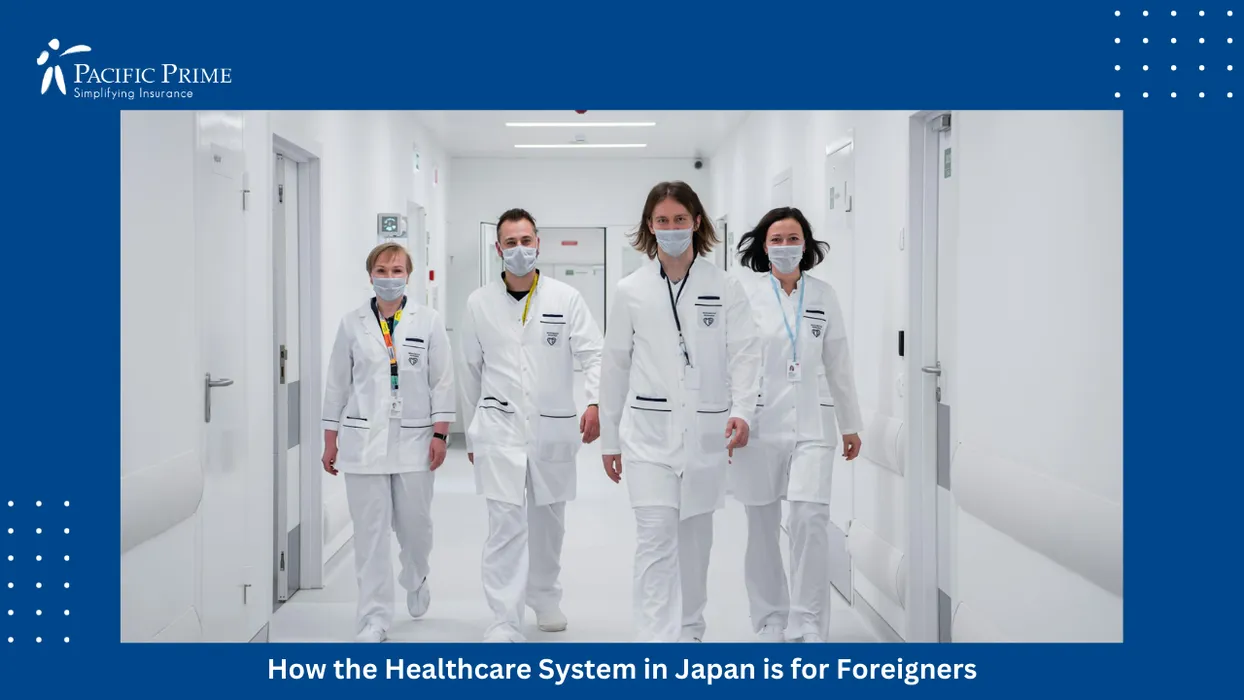
Japan has universal health care for its citizens and legal residents, which includes expats who are staying in Japan for three months or longer. The goal of having universal health care is to make sure everyone in Japan has access to basic medical services without financial hardship.
Does Japan Have Free Healthcare?
Japan doesn’t have free healthcare. With universal health care, the out-of-pocket costs for patients are relatively low compared to many other developed countries. The system is funded mainly through mandatory public health insurance premiums and general taxation.
Health Insurance Systems In Japan
Even expats and digital nomads can access basic healthcare services in Japan almost at no cost. Now it’s time to take a closer look at health insurance in Japan.
Is Health Insurance Mandatory For Expats In Japan?
It is mandatory for expats to have health insurance in Japan. According to Japanese laws, digital nomads or foreigners need to enroll in the National Health Insurance (NHI) when they reside in Japan for more than 3 months.
Those who are employed by Japanese companies will be enrolled in the Social Health Insurance (SHI).
Who Can Enroll in SHI?
Social Health Insurance (SHI) is available for people who are full-time workers in a medium to large-sized company in Japan. These are some examples of people who can enroll in SHI:
- Employees of organizations with a mutual aid association
- Former SHI policyholders who have been unemployed for less than two years
- Individuals who are covered by their spouse’s SHI plan.
- Public pensioners with an eligible spouse
Unlike NHI, where households enroll collectively but pay one premium, dependents (spouse/child) are automatically covered under the primary holder’s SHI without the need for separate enrollment.
How Expats Can Enroll in the SHI Program
To enroll in the SHI, you need to contact your employer or your local Social Insurance Office. But normally, it’s your employer’s job to enroll you. You only need to fill out the form and provide some paperwork.
Once the processes are done, you will get your SHI insurance card, which gives you access to healthcare services.
NHI Eligibility for Expats
The National Health Insurance (NHI) program is open to almost everyone in Japan. For expats who intend to live in Japan for more than 3 months, you can also enroll in this program, unless:
- You are a short-term resident
- You are 75 years of age or above (you can then enroll in the Late‑stage Medical Care System for the Elderly instead)
- You receive health insurance from your employer. (for example, SHI, and mutual aid associations)
- You receive public assistance
Moreover, even when you are employed by a company in Japan that offers you the SHI, you can apply for NHI if you are not eligible for Social Health Insurance (SHI). (For example, when you work as a part-time or temporary worker.)
How Expats Can Sign Up for Japanese National Health Insurance
If you are eligible to enroll in NHI, you will typically need to follow these steps:
- Register your residence: You must register your residence within 14 days after you move to Japan. All you need to do is take your passport and residence card to a local municipal office (also known as a city hall or ward office). Bring your passport and residence card, too.
- Enroll in the National Health Insurance (NHI) program: After you register your residence, you need to fill out the forms to enroll in NHI
- NHI Premiums: With NHI premiums, you won’t be asked to pay anything at the office. Instead, you will receive a premium bill once your insurance card (Kenko Hokensho) is sent to you.
Tips: Even though the NHI covers most of the expenses, you can also get private health insurance to help cover the rest of the medical bills.
Private Insurance in Japan for Expats
For peace of mind as well as better overall health coverage, many expats in Japan keep their private health insurance even when they are eligible for public health insurance.
The Japanese government covers 70% or more of medical expenses when you are enrolled in NHI or SHI. The balance (which can be up to 30% of the expenses) is out-of-pocket money you have to pay, which is not that much when you think about it in percentage.
But do not forget that if you need surgery or complicated treatment, 30% can be a lot of money. Moreover, comprehensive private insurance can be really helpful when you are waiting for approval from NHI or SHI.
Hospitals in Japan
Under Japanese law, hospitals are required to run as non-profits and have to be owned and operated by physicians. There are more than 8,000 hospitals in Japan, including private hospitals, public hospitals, and clinics.
Who Can Access Hospitals/Clinics?
All Japanese citizens, residents, and those who are registered legally can access both public and private hospitals and clinics. The medical expenses will be partly covered by the NHI. Moreover, you can check with them first to see if you can use your private health insurance.
Language Barriers in Japan’s Hospitals
As an expat in Japan, going to a hospital or clinic can be challenging because not many professionals speak English. To address this, you can visit the Multilingual Medical Questionnaire (MMQ) page to access useful queries and translations for medical services.
You can also check out more useful multilingual materials for foreigners, provided by the Ministry of Health, Labor, and Welfare (MHLW). Additionally, you can contact the AMDA International Medical Information Center for more information or get a translation on the phone.
Japanese Emergency Numbers
When you’re living in Japan, it’s a good idea to know the emergency numbers for medical services.
- Call 119 for an ambulance service
- #7199 is for non-emergency medical needs
- Call 118 for maritime emergencies
- To contact the police, dial 110
- Dial 03-5285-8181 (open every day from 9 AM to 8 PM) to contact Tokyo Metropolitan Medical Institute Information
- Contact an emergency translation Service at 03-5285-8185 (weekdays 5 PM to 8 PM, weekends and holidays 9 AM to 8 PM).


Buying Medicine in Japan
If you bring your personal medications to Japan, you might need to apply for a Yunyu Kakunin-sho (a certificate of import). After that, if you want to purchase more medicines, you need to get prescriptions from Japanese doctors.
Medicines
In Japan, several medicines are not allowed to be imported. That’s why sometimes, you get the same medicines that have the same effects but in different brands.
Pharmacies
One thing that might surprise you when you visit a hospital or clinic in Japan is that the doctor tends to give a prescription with a lot of medicines even when you only have the normal flu.
Also, note that Japanese pharmacies do not accept foreign prescriptions–you need to get a prescription from a Japanese doctor.
Conclusion
After getting to know about the healthcare systems in Japan, you might be thinking about getting private health insurance because securing expat health insurance provides peace of mind for you. It also helps with your financial plan.
For over a quarter century, Pacific Prime has assisted expats in finding the ideal insurance plans that suit their needs and budget. Whether it’s travel insurance or health insurance, we provide unbiased advice and compare plans for you. Contact us today to receive a complimentary quote.
Frequently Asked Questions
Who is eligible for healthcare in Japan?
All legal residents are eligible for healthcare in Japan, whether they are Japanese citizens or non-citizens. Expats and digital nomads need to live more than three months in Japan in order to get National Health Insurance (NHI) and register for their residency.
What is the cost of healthcare in Japan?
According to the National Health Insurance (NHI), and Social Health Insurance (SHI), the government pays 70% or more of the medical expenses, leaving only 30% or less for patients to pay out-of-pocket.
How can I access medical care in Japan?
You can enrol in National Health Insurance (NHI) if you are not employed by medium to large-sized companies in Japan. In case you are hired as a full-time employee, the company will enroll you in Social Health Insurance (SHI).
Do I need to pay for hospital services in Japan?
Even when you are covered by National Health Insurance (NHI) or Social Health Insurance (SHI), you do have to pay for hospital services. NHI/SHI will help cover 70% or more of the medical bills, but if you have private health insurance, you might not have to pay for hospital services at all.

Since joining Pacific Prime, Martin has become even more aware of the gap between the true value of insurance products and most people’s appreciation of it, and developed a passion for demystifying and simplifying matters, so that more people get the protection they need at a cost they can easily afford.
In his free time, Martin attends concerts of various genres, and plays the violin with piano accompaniment he pre-recorded himself or played live by his niece.
- The Cost of Living in Estonia - November 4, 2026
- Dental Insurance In Thailand For Expats: 2026 Guide - November 3, 2026
- 5 Things to Be Thankful for at Work - October 16, 2026
Comments
2 Comments
What are the procedures for expats in Japan to get reimbursed for medical expenses through their international health insurance? How can expats in Japan access alternative or holistic medical treatments?
To get reimbursed for medical expenses in Japan through your international health insurance, expats should first pay for the treatment upfront and then file a claim with their insurer. This typically involves submitting receipts, detailed medical reports (translated if necessary), and completed claim forms as required by the insurer. Expats should verify in advance whether their insurance covers specific treatments and if direct billing is available at certain hospitals.
For accessing alternative or holistic treatments, expats can seek out clinics specializing in acupuncture, Kampo (traditional Japanese medicine), or chiropractic care, as these are widely available in Japan. However, coverage for such treatments depends on the insurance policy, so reviewing the terms of your plan or consulting your insurer is recommended.
Contact Pacific Prime today for a free consultation to ensure your health insurance plan meets your needs in Japan, including alternative care options!
Leave a Comment