

Extreme Sports Insurance: Staying Safe While Adventuring
High-risk sports like scuba diving, skiing, or mountain biking are usually excluded from basic travel insurance plans, so to ensure you’re protected, you’ll need extreme sports insurance that specifically covers injuries and emergencies related to hazardous activities.
Discover the world's top
health insurers.
Compare quotes with
a click of the button.
Looking to stay protected during your next thrill? In this article, we will cover how to compare providers and find travel insurance for extreme sports. We’ll also help you find a plan that works for your specific needs.

What is Extreme Sports Travel Insurance?

Extreme sports insurance is an insurance benefit that provides medical coverage for injuries or accidents that are the result of an adventurous sport performed while traveling. This benefit is often not included in a basic travel insurance plan and must be added on through a hazardous sports rider.
An adventure sports benefit typically provides coverage for:
- Medical expenses
- Medical evacuation, if necessary
- Accidental death and dismemberment
- Repatriation
Key Factors to Consider Before Buying Adventure Sports Insurance
Before buying adventure sports insurance, consider cost, coverage amounts, customizability, which activities you’ll do, if more medical insurance is necessary, the location of these activities, and if your planned transportation is deemed risky.
1. How Much Does the Hazardous Sports Rider Cost?
You’ll need to consider just how much the hazardous sports rider costs and if there are different coverage levels for this rider at a higher price point. It is a delicate balance to dance between affordability and comprehensive coverage.
2. What are the Coverage Amounts for Your Activities?
It is worth comparing how much coverage is allotted to each activity when comparing multiple plans. Just because an activity is covered doesn’t mean you can’t find a higher monetary protection for the same activity somewhere else.
3. Is Your Extreme Sport Add-On Customizable?
It is worth considering how customizable the extreme sports add-on is. The more flexible the plan, the better it may be for you.
4. What Activities Do You Expect to Do?
Which adventure activities do you expect to participate in on your trip? Having coverage for your planned activities is essential.
5. Do You Have Sufficient Coverage?
Even after getting coverage for an extreme sport, you need to decide if it is enough coverage. Sometimes getting an additional medical insurance add-on is also essential if you know your adventure-seekers will be pushing their limits.
6. What Sports are Covered in Your Destination?
Ensure that your extreme sport is covered in the destination you will be participating in that sport. It may seem obvious, but reading through your whole policy and knowing the benefit inclusions and exclusions can help you make sure you’ll actually be covered.
7. Are Your Transportation Methods Considered Adventurous?
Some insurance policies will consider certain types of transportation risky and will exclude them from coverage. Mopeds and scooters, for example, may be excluded unless their exclusion is specifically waived by an extreme activity waiver. Be sure to double-check!
Top 12 Travel Insurance Providers for Extreme Sports
The following sections introduce these top providers who offer extreme sports coverage in their travel insurance plans:
- IMG
- Blue Cross Blue Shield Global Solutions
- April International
- VUMI
- MSH International
- Battleface
- Travelex
- Tin Leg
- John Hancock
- HTH Travel Insurance
- Seven Corners
- World Nomads
- Trawick International
- Atlas American and Atlas International
Pacific Prime’s Recommended Extreme Sports Insurers
IMG, Blue Cross Blue Shield Global Solutions, April International, VUMI, and MSH International are our five favorite hazardous sports providers, in no particular order. We can help you compare their plans and negotiate your benefits to get the adventure sports rider you need.
1. IMG
IMG’s Patriot Travel Series plans have an optional Adventure Sports Rider. This rider has a lifetime maximum benefit amount relative to your age that can be as high as USD $50,000. This rider can be added to both the Patriot Lite and Patriot Platinum plans.
Depending on your age, you can receive the following lifetime maximum benefit:
- Age 1–49: USD $50,000
- Age 50–59: USD $30,000
- Age 60–64: USD $15,000
2. Blue Cross Blue Shield Global Solutions
Blue Cross Blue Shield Global Solutions’ Xplorer Premier plan has unlimited coverage for adventure sports. For less coverage, consider GeoBlue’s Single Trip Voyager Choice or Annual Multi Trip Trekker Choice plans.
Both of these include a maximum benefit of up to USD $25,000 for claims resulting from downhill skiing and scuba diving at a depth of 20 meters or less.
3. April International
April International offers Sport and Leisure Benefits in their Premium Travel and Holiday Insurance plan for skiing, scuba diving, and more. This covers sport and leisure equipment, search and rescue expenses, hyperbaric chamber costs, and more.
4. VUMI
VUMI offers coverage for the treatment of injuries received during the training or practicing of hazardous hobbies and/or non-professional sports. This benefit has 100% UCR coverage in the following plans: Direct VIP, Access VIP, and Absolute VIP plans.
For VUMI’s Optimum VIP plan, the benefit includes USD $100,000 per lifetime for polytrauma or severe burns.
UCR stands for payment that is usual, customary, and reasonable in the region where treatment is given.
5. MSH International
MSH International provides Special Risk Insurance that covers extreme sports and activities in high-, medium-, and low-risk locations.


Seven More Travel Insurers Offering Adventure Coverage
Now we will discuss seven additional providers who also offer extreme sports coverage.
Battleface
The Single Trip Discovery plan by Battleface includes coverage for Adventure Activities up to USD $100,000 for medical emergency costs (USD $50,000 for residents of NH). A USD $50 deductible applies. This covers skiing, scuba diving, and hiking activities.
Travelex
The Travel Select plan by Travelex has an Adventure Sports Upgrade and an Additional Medical Coverage Upgrade.
Tin Leg
Tin Leg has an Adventure plan with its most comprehensive adventure sports coverage. It includes USD $500 of sports equipment delay coverage per person, sports fees covered in cancellation and interruption benefits, lost sports equipment, and basic sports and activities medical protection.
Tin Leg also has varying levels of extreme sports coverage in their Standard, Luxury, Silver, and Gold plans.
Seven Corners
Seven Corners’ Travel Medical Basic plan and Travel Medical Choice plan have an optional Adventure Activities add-on that offers coverage on sports such as bungee jumping, caving, and hang gliding up to the medical maximum for the travel insurance plan.
World Nomads
The Standard and Explorer plans by World Nomads cover over 200 adventure activities, including scuba diving, mountain biking, surfing, bungee jumping, and skiing. Benefits include protection for your sports gear up to USD $3,500 in the Explorer plan and USD $2,500 in the Standard plan.
Trawick International
Trawick International’s SafeTreker plan has coverage for 450+ sports and activities and includes sports equipment rental, search and rescue, and non-medical evacuation. It also has an option for Extreme Sport riders with up to USD $25,000 trip-only excess maximum for listed sports.
Atlas America and Atlas International
Atlas America’s travel medical insurance plan automatically covers adventure sports activities as long as the activity is not performed for professional gain, money, or prize.
Popular Extreme Sports That Require Insurance
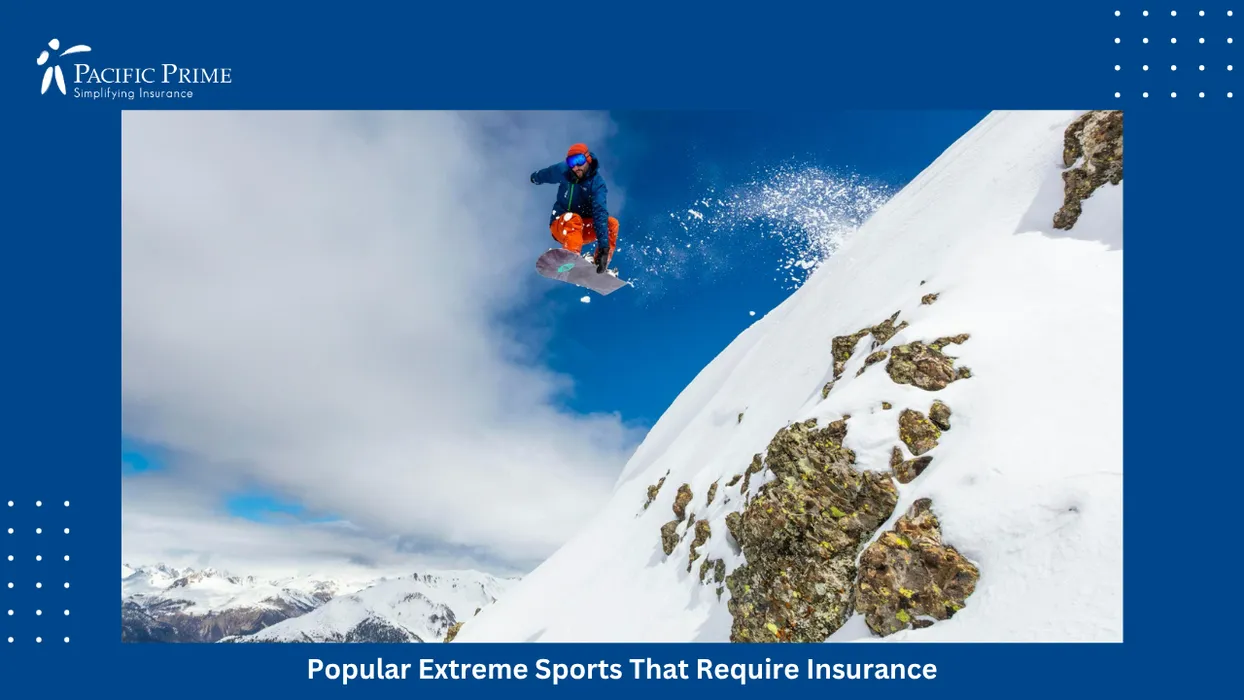
Some of the most popular sports and activities that demand coverage include motocross, rock climbing, skiing and snowboarding, bungee jumping, and spelunking. Due to their high risk of causing injury, these activities are typically not covered by travel insurance.
Here is a list of some of the most popular sports that need hazardous sports coverage while traveling:
- Motocross
- Paragliding and kitesurfing
- Rock climbing
- Mountain biking
- Skydiving
- Trekking
- Surfing
- Skiing
- Snowboarding
- Bungee jumping
- Hang gliding
- Kayaking
- Motorcycle, motor scooter, and electric scooter riding
- Parachuting
- Snowmobiling
- Spelunking
- Wakeboarding
- Water skiing
- Windsurfing
- Ziplining
What Does a Travel Medical Insurance Plan Typically Cover?
A travel medical insurance plan is designed to cover emergency medical expenses while traveling. The emphasis is usually on medical fee protection, which is different from a travel insurance plan that is focused on travel expenses, such as canceled trips and lost baggage.
Frequently Asked Questions
Does travel insurance cover extreme sports?
Most travel insurance plans exclude coverage for extreme sports, such as scuba diving, skiing, surfing, and mountain biking. If you plan to participate in a hazardous activity while traveling, getting a plan with an adventure sports rider that includes coverage for your activity is essential.
Is extreme sports insurance different from travel insurance?
Extreme sports insurance is not a stand-alone plan; instead, it is one benefit that can be included in or added to a travel insurance plan. Many travel insurance plans have exclusions for extreme sports, however, so you’ll need to carefully select a provider and plan that offers sports coverage.
What types of activities need adventure sports coverage?
Some activities that need adventure sports coverage because they are excluded from most travel medical benefits are motocross, paragliding and kitesurfing, rock climbing, mountain biking, skydiving, trekking, surfing, skiing, snowboarding, bungee jumping, caving, and hang gliding.
What is the definition of an extreme sport?
An extreme sport is one where you are at risk of losing a life or limb if it goes wrong, even for the most skilled participant. Extreme sports require additional medical insurance coverage for travelers.

Conclusion
When traveling, it is easy to get swept up and try new activities such as diving, skiing, or even spelunking. You might think that your travel insurance will have you covered if you get injured during these activities, but the truth is you most likely won’t unless you have extreme sports coverage.
It is important for travelers to be prepared when planning their next adventure. If you are unsure whether you will participate in these activities, it is always safer to have extreme sports covered in your travel insurance plan so you can have peace of mind knowing you will still be insured.
If you are looking to secure a travel insurance plan, Pacific Prime can help you. With over two decades of expertise in finding the best insurance plans to suit our client’s unique needs and budget, our insurance experts will be able to find you the perfect travel insurance for your travels.
Get in touch with one of our expert advisors today to get insured for your next big adventure.
If you found value in this article, you’ll also want to read our articles Health Insurance in Australia: Navigating the System and Expat Insurance in Germany: Coverage for Expatriates.

Born and raised in the cultural melting pot that is Hong Kong, and having studied at an international school, Vista has developed a multicultural perspective that he uses in his writing and strives to connect to people of different backgrounds.
In his free time, Vista enjoys immersing himself in different worlds, from video games to light novels and movies. His hobbies help him expand his writing style by putting himself in the point-of-view of different people and characters.
- Health Insurance for British Expats in Australia - August 11, 2026
- Health Insurance for Canadian Expats in Japan - August 11, 2026
- Health Insurance for American Expats in Ecuador - August 11, 2026

Comments
2 Comments
Are there any specific certifications or safety standards I should look for when choosing an adventure sports operator to ensure they are covered by my insurance? and What steps can I take to document my extreme sports activities to streamline the claims process in case of an injury?
When selecting an adventure sports operator, look for certifications such as ISO safety standards, accreditation by global organizations like the International Air Transport Association (IATA) or Professional Association of Diving Instructors (PADI) for diving, and local regulatory approvals. Additionally, verify that the operator follows safety guidelines and has adequate liability insurance, as this can affect coverage under your extreme sports insurance plan.
To streamline the claims process in case of an injury, document your activities by saving receipts for operator fees, capturing photos or videos of the activity, and maintaining a copy of the operator’s safety certifications. Promptly report incidents to your insurer and obtain a medical report if treatment is required. For expert advice on extreme sports insurance tailored to your needs, contact us via our Contact Us page.
Ask a Question
We'll notify you
when our team replies!